
Frozen meat is a convenient option for many households because it allows families to store food for longer periods and prepare meals whenever needed. Chicken, beef, mutton, and other types of meat can remain in the freezer until they are required for cooking. However, knowing how to safely thaw frozen meat is just as important as storing it correctly.
Many people remove frozen meat from the freezer and leave it on the kitchen counter until it becomes soft. Although this method may seem simple, it can create food safety risks. Harmful bacteria can grow on the outer surface of meat while the center remains frozen.
Understanding the correct methods of thawing frozen meat can help prevent foodborne illness, maintain food quality, and make everyday cooking safer.
In this article, we will explore the safest ways to thaw frozen meat, common mistakes to avoid, and practical food safety tips that can be followed in any home kitchen.
Why Is It Important to Thaw Frozen Meat Safely?
Thawing is the process of bringing frozen food to a temperature where it becomes soft enough for cooking. When meat is frozen, the low temperature prevents most bacteria from multiplying, although freezing does not necessarily destroy them.
As meat begins to thaw, its temperature gradually increases. If the outer surface becomes too warm, bacteria that were already present may begin to multiply.
Food safety experts generally identify temperatures between 40°F and 140°F, or approximately 4°C and 60°C, as the danger zone for bacterial growth.
For this reason, meat should not be left at room temperature for long periods.
Proper thawing keeps meat at safer temperatures and reduces unnecessary exposure to harmful bacteria. It also helps preserve the meat’s natural texture, moisture, and flavor.
1. Thaw Frozen Meat Safely in the Refrigerator
Refrigerator thawing is one of the safest and most reliable methods for preparing frozen meat.
This method allows meat to thaw slowly while remaining at a controlled temperature of 40°F (4°C) or below.
To thaw meat in the refrigerator, place the frozen package inside a clean container or tray. Keep it on the bottom shelf to prevent any liquid from dripping onto other foods.
The time required depends on the type, thickness, and quantity of meat.
Small packages of chicken pieces, minced meat, or boneless meat may thaw within approximately 24 hours. Larger cuts, whole chickens, and big portions of beef or mutton may require several days.
For example, a large frozen roast may need more than one day to thaw completely.
Although refrigerator thawing requires planning, it offers several advantages.
The meat remains at a safer temperature, the risk of bacterial growth is reduced, and the quality of the meat is generally maintained.
Another benefit is that properly refrigerated meat does not always need to be cooked immediately after thawing.
Raw poultry and ground meat can generally remain refrigerated for another one to two days. Whole cuts of beef, lamb, and similar red meats may remain refrigerated for three to five days, provided they have been handled and stored correctly.
2. Use Cold Water for Faster Meat Thawing
Sometimes people forget to remove meat from the freezer before preparing a meal. In such situations, cold water thawing can be a useful alternative.
This method is faster than refrigerator thawing when performed correctly.
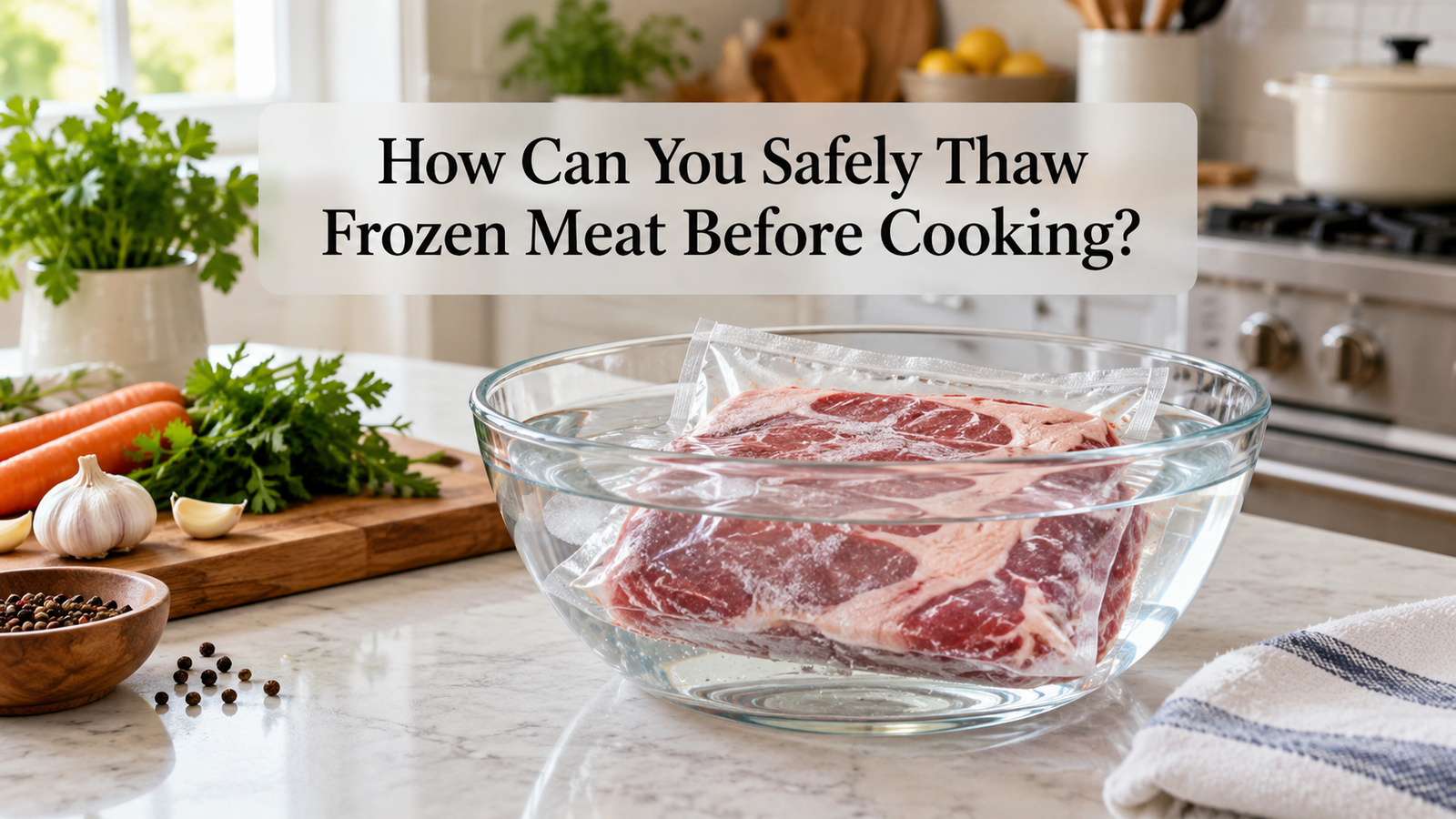
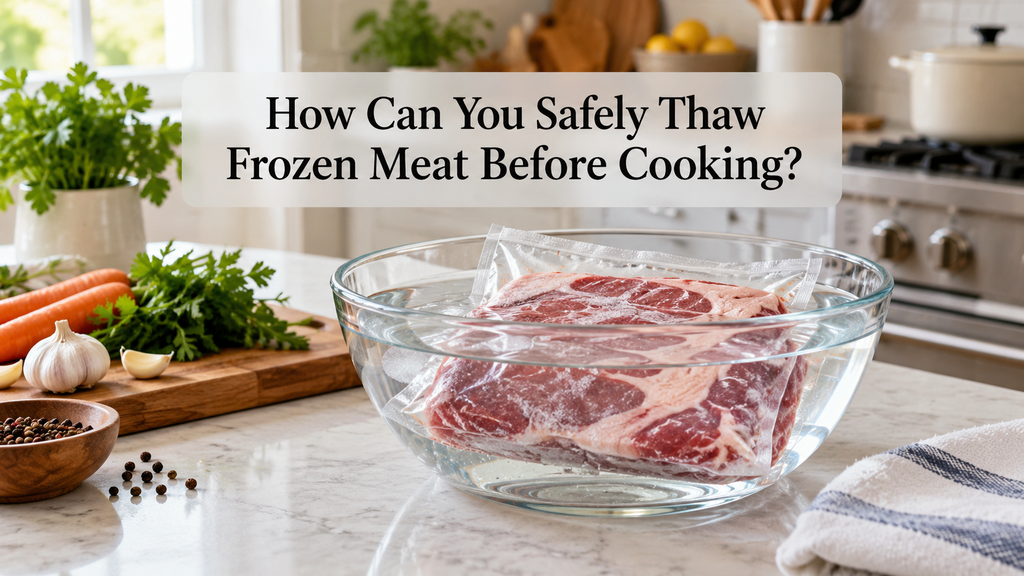
First, place the frozen meat in a leakproof plastic bag. The packaging should prevent water from entering and meat juices from escaping.
Fill a clean bowl or container with cold tap water and completely submerge the packaged meat.
Change the water every 30 minutes to help maintain an appropriate temperature throughout the thawing process.
Never use warm or hot water because it can raise the temperature of the meat’s outer surface too quickly.
Small portions of meat may thaw within an hour, while larger packages can take several hours.
The exact time depends on the thickness and weight of the meat.
One important rule is that meat thawed in cold water should be cooked immediately after thawing.
This practice helps reduce the risk of bacterial growth and prevents unnecessary delays before cooking.
3. Thaw Frozen Meat in the Microwave
A microwave can be helpful when meat needs to be prepared quickly.
Many modern microwave ovens include a defrost setting designed to thaw frozen foods.
Before using this method, remove packaging that is not microwave safe and place the meat in a suitable microwave safe dish.
Select the defrost function and follow the microwave manufacturer’s instructions.
If the microwave requires the weight of the meat, enter the correct amount to improve the thawing process.
During defrosting, turn or rotate the meat when necessary to encourage more even thawing.
It is important to remember that microwaves do not always heat food evenly.
Some portions may begin cooking while other sections remain frozen. This uneven heating can allow bacteria to multiply in warmer areas if cooking is delayed.
Therefore, meat thawed in a microwave must be cooked immediately.
Microwave thawing is particularly convenient for small portions, minced meat, and chicken pieces.
For larger cuts, refrigerator thawing may provide more consistent results.
4. Can You Cook Frozen Meat Without Thawing It?
Many people believe that frozen meat must always be thawed before cooking. However, some types of meat can be cooked directly from the freezer.
This option can be useful when there is limited time for meal preparation.
Frozen chicken pieces, beef portions, and certain other cuts can be cooked without thawing, provided the cooking method heats them safely throughout.
Cooking frozen meat generally requires approximately 50 percent more time than cooking the same portion after thawing.
The additional cooking time depends on the type, size, and thickness of the meat.
A food thermometer should be used to check that the center reaches the appropriate internal temperature.
For example, poultry should reach 165°F (74°C).
Cooking meat directly from frozen is not suitable for every appliance or recipe. Large frozen pieces should not be placed in a slow cooker because they may warm too slowly.
Always follow the appliance instructions and use a cooking method that heats the meat thoroughly.
5. Why Should You Avoid Thawing Meat on the Kitchen Counter?
Leaving frozen meat on a kitchen counter is a common household practice.
People often assume that meat is safe as long as its center remains frozen. Unfortunately, this assumption can be dangerous.
When meat sits at room temperature, the outer layers begin warming much faster than the center.
These warmer areas may enter the temperature danger zone, where harmful bacteria can multiply.
Even when the inside still feels cold, the outside may already have reached an unsafe temperature.
For this reason, raw meat should never be thawed on countertops, dining tables, or other surfaces at room temperature.
Cooking may destroy many harmful bacteria, but it does not reliably eliminate every toxin that certain bacteria can produce.
Using the refrigerator, cold water, or microwave is a much safer approach.
6. Keep Raw Meat Separate From Other Foods
Preventing cross contamination is another essential part of safe meat preparation.
Raw meat can contain microorganisms that should not come into contact with ready to eat foods.
When thawing meat in the refrigerator, always place it inside a covered container or tray.
Keep it below vegetables, fruits, cooked meals, and other foods that do not require further cooking.
After handling raw meat, wash your hands thoroughly with soap and running water for at least 20 seconds.
Clean knives, cutting boards, countertops, and utensils that have touched raw meat before using them for another purpose.
It is also important to avoid washing raw chicken or other meat under running water.
Splashing water can spread bacteria around the sink and onto nearby surfaces.
Following these simple hygiene practices can make food preparation safer for the entire family.
7. How Long Does Frozen Meat Take to Thaw?
The time required to thaw frozen meat depends on several factors.
These include the meat’s weight, thickness, packaging, and the method being used.
A small package of chicken pieces may thaw in the refrigerator overnight or within a day.
A whole chicken or large piece of beef may require one or more days.
Cold water thawing usually takes less time, especially when meat is divided into smaller portions.
Microwave thawing can be completed much faster, but the meat must be cooked immediately afterward.
Rather than relying entirely on a fixed number of hours, check whether the meat has thawed sufficiently for the intended cooking method.
The safest approach is to plan ahead and allow enough time for refrigerator thawing whenever possible.
8. Can You Refreeze Meat After Thawing?
Whether thawed meat can be frozen again depends on how it was thawed.
Meat that has been thawed safely in the refrigerator can generally be refrozen without cooking, provided it has remained properly refrigerated and has not exceeded recommended storage times.
However, refreezing may affect its quality.
Repeated freezing and thawing can reduce moisture and sometimes change the texture of the meat.
Meat thawed using cold water or a microwave should be cooked before it is frozen again.
This distinction is important because these faster methods may expose portions of the meat to warmer temperatures.
If meat has been left at room temperature for more than two hours, it should be discarded. When the surrounding temperature exceeds 90°F (32°C), the limit is one hour.
Refreezing cannot make improperly handled meat safe again.
9. Does Thawing Affect the Taste and Texture of Meat?
Thawing methods can influence how meat feels and tastes after cooking.
When meat freezes, ice crystals develop within its tissues.
During thawing, some moisture may escape as these crystals melt.
This loss of liquid can sometimes affect the final texture, especially when meat has been frozen for a long time or exposed to repeated temperature changes.
Slow refrigerator thawing generally provides better control over the process.
It also makes it easier to prepare meat without unnecessarily warming its surface.
To protect food quality, use suitable freezer packaging and avoid repeatedly thawing and refreezing the same portion.
Dividing meat into smaller packages before freezing can also reduce waste and simplify future meal preparation.
10. Common Mistakes People Make When Thawing Frozen Meat
Several everyday habits can increase food safety risks.
One common mistake is using hot water to thaw meat quickly. Although the outer surface may soften faster, it can also become warm enough for bacteria to multiply.
Another mistake is leaving meat in the kitchen overnight.
Even if the room feels cool, normal indoor temperatures are usually too warm for safe meat thawing.
Some people also place frozen meat directly in water without protective packaging. This can increase the risk of contamination and affect food quality.
Using the microwave and then leaving the thawed meat uncooked for several hours is another unsafe practice.
Finally, assuming that meat is safe simply because it looks or smells normal can be misleading.
Harmful bacteria do not always produce noticeable changes in appearance or odor.
Avoiding these mistakes helps create safer cooking habits.
11. Practical Tips for Thawing Meat in Everyday Cooking
Safe thawing becomes easier when it is included in regular meal planning.
Before freezing meat, divide large quantities into smaller portions based on the amount usually needed for one meal.
For example, a family can separate chicken, beef, or mutton into individual cooking portions.
Smaller packages generally freeze and thaw more conveniently.
Label each package with the freezing date to make storage easier to manage.
When planning tomorrow’s meal, transfer the required meat from the freezer to the refrigerator ahead of time.
Use a clean, covered container to catch any liquid.
If refrigerator thawing is not possible, select an approved faster method and prepare the meat immediately afterward.
Always check the internal temperature during cooking rather than judging safety only by color or appearance.
For reference, poultry should reach 165°F (74°C), ground meat such as beef or lamb should reach 160°F (71°C), and whole cuts of beef or lamb should reach 145°F (63°C), followed by a three minute rest.
These temperatures help ensure that meat is cooked safely.
12. Why Food Safety Education Matters at Home
Food safety is not limited to professional kitchens and restaurants.
Every household benefits from understanding how to store, thaw, prepare, and cook meat correctly.
Small daily decisions can influence the safety of meals served to children, adults, and older family members.
Learning proper thawing methods also encourages better kitchen organization.
Families can reduce unnecessary food waste, avoid unsafe shortcuts, and develop greater confidence when handling frozen foods.
Safe food preparation does not require expensive equipment.
A refrigerator, clean containers, leakproof packaging, proper handwashing, and a reliable food thermometer can make a meaningful difference.
The most important factor is following consistent food safety practices.
Conclusion
Learning how to safely thaw frozen meat before cooking is an important part of maintaining a healthy and organized kitchen.
Refrigerator thawing is generally the best choice because it keeps meat at a controlled temperature. Cold water thawing offers a faster option when the meat is properly packaged and the water is changed regularly. Microwave thawing is also convenient, provided the meat is cooked immediately afterward.
Avoiding room temperature thawing, preventing cross contamination, and following recommended cooking temperatures are equally important.
With a little planning and attention to food safety, families can prepare chicken, beef, mutton, and other frozen meats confidently while reducing the risk of foodborne illness.
The goal is simple: keep meat at safe temperatures, handle it hygienically, and cook it thoroughly before serving.


