
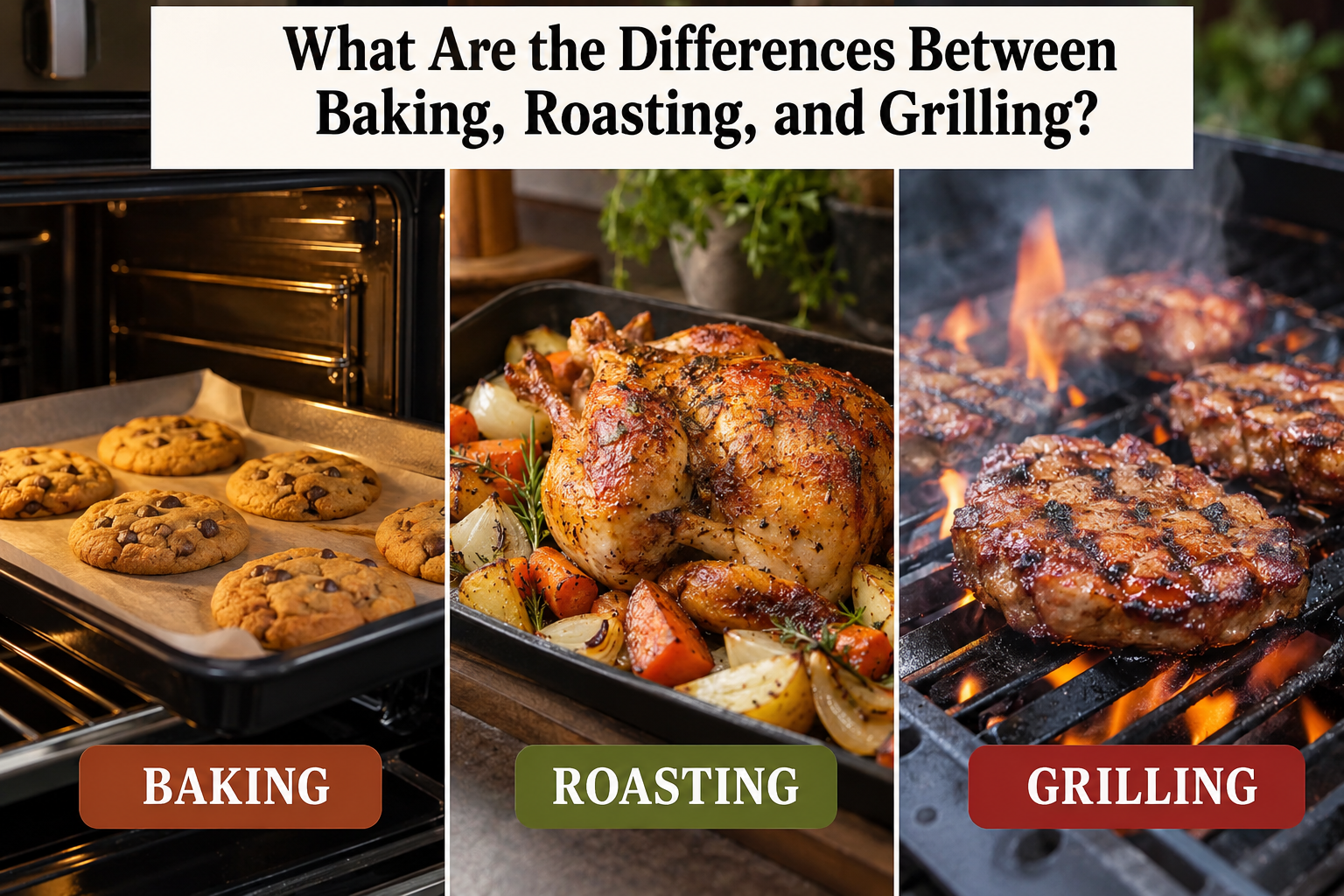
Cooking is an important part of everyday life, and understanding different cooking methods can help us prepare delicious and satisfying meals. Among the most popular cooking techniques are baking, roasting, and grilling. These methods are commonly used in home kitchens, restaurants, and professional cooking environments. Although they all use heat to cook food, they differ in temperature, cooking process, equipment, flavor, and final texture.
When I started learning about cooking methods, I noticed that many people use the terms baking, roasting, and grilling without fully understanding their differences. For example, chicken can be baked, roasted, or grilled, but each method produces a different taste and texture. The cooking technique also affects how much moisture remains in the food and how the outer surface develops.
Understanding the differences between baking, roasting, and grilling makes it easier to choose the right method for different ingredients. In this article, we will explore how these cooking techniques work, their advantages, and when each method is most suitable.
What Is Baking?
Baking is a cooking method that uses dry heat, usually inside an oven, to cook food evenly. The heat surrounds the food and gradually raises its internal temperature. Baking is commonly associated with bread, cakes, biscuits, pastries, and other flour products.
However, baking is not limited to sweet foods. Vegetables, fish, chicken, potatoes, and pasta dishes can also be prepared using this method.
One important feature of baking is its ability to cook food gently and consistently when the oven temperature is properly controlled.
For example, when baking a cake, the heat causes the ingredients to undergo physical and chemical changes. The batter becomes firm, the cake rises, and the surface develops a golden color.
Baking generally requires careful temperature control because excessive heat can burn the outside before the inside cooks properly.
How Does Baking Work?
Baking mainly relies on heat transfer through hot air, radiation from oven surfaces, and conduction through baking trays or pans.
When food enters a preheated oven, its surface begins absorbing heat. The heat gradually moves toward the center, allowing the food to cook.
During baking, moisture may evaporate, proteins may become firm, and starches may change their structure. These processes help create the final texture.
For example, bread develops a firm crust while the inside remains soft. Similarly, baked potatoes become tender as their starches absorb moisture and soften.
The exact result depends on the ingredients, oven temperature, cooking time, and type of baking container.
What Is Roasting?
Roasting is another dry heat cooking method that usually takes place inside an oven or over an open heat source.
It is commonly used for meat, poultry, vegetables, and other foods that benefit from a browned outer surface.
Roasting often uses relatively high temperatures to encourage browning and develop a rich flavor. However, some foods are roasted slowly at lower temperatures to achieve tenderness.
One major difference between baking and roasting is the type of food traditionally prepared using each method.
Baking is commonly associated with bread and flour products, while roasting is more closely connected with meat and vegetables.
However, the distinction is not absolute because both methods can use the same oven and similar temperatures.
How Does Roasting Work?
During roasting, dry heat cooks the food while encouraging moisture to evaporate from its surface.
As the outer surface becomes hotter and drier, browning reactions can occur. These reactions create attractive colors and complex flavors.
One important process is the Maillard reaction, which occurs when certain sugars and amino compounds react under suitable heating conditions.
This reaction contributes to the appealing smell and flavor of roasted meat, potatoes, and vegetables.
For example, roasted chicken may develop golden, flavorful skin while its interior remains tender when cooked correctly.
Roasting vegetables such as carrots, cauliflower, and potatoes can also enhance their natural sweetness and create a pleasant texture.
What Is Grilling?
Grilling is a cooking technique that uses strong, direct heat to prepare food. The heat usually comes from charcoal, gas burners, electric heating elements, or another heated surface.
Unlike baking and roasting, which commonly use enclosed ovens, grilling often exposes food to intense heat from a nearby source.
Grilling is especially popular for chicken, beef, fish, kebabs, burgers, and vegetables.
One of the most recognizable features of grilling is the development of browned surfaces and, in some cases, visible grill marks.
Charcoal grilling may also produce a smoky flavor that is difficult to achieve through ordinary oven baking.
How Does Grilling Work?
Grilling transfers heat to food through radiation, conduction, and sometimes convection.
When food is placed on a heated grill, its surface quickly absorbs heat. This rapid heating encourages browning and can create a slightly crisp exterior.
For example, a grilled chicken breast may develop a flavorful outer layer while remaining moist inside if it is cooked carefully.
The distance between the food and heat source, grill temperature, cooking time, and thickness of the ingredients all influence the final result.
Grilling requires attention because strong heat can burn the surface before the center reaches a safe cooking temperature.
Main Differences Between Baking, Roasting, and Grilling
Although baking, roasting, and grilling are all dry heat cooking techniques, several characteristics make them different.
1. Cooking Temperature
Temperature is one of the most important factors that separates these cooking methods.
Baking commonly uses moderate temperatures, although temperatures vary according to the recipe. Cakes may require approximately 160°C to 180°C, while some breads require hotter ovens.
Roasting often uses temperatures around 180°C to 230°C, depending on the ingredients and desired result.
Grilling commonly involves higher surface temperatures because food receives heat directly from the grill or nearby heat source.
However, these temperature ranges are not fixed. All three methods can involve different heating levels depending on the food.
2. Heat Distribution
Baking generally provides surrounding heat inside an enclosed oven.
Roasting also uses surrounding heat but often focuses on developing surface browning and a desirable outer texture.
Grilling uses concentrated heat from one or more directions. Food may need to be turned to achieve even cooking.
Understanding heat distribution helps explain why the same ingredient can produce different results through different cooking methods.
3. Flavor Development
Flavor is another major difference between baking, roasting, and grilling.
Baking usually preserves the natural flavor of ingredients while creating textures associated with bread, cakes, and casseroles.
Roasting develops deeper flavors through browning and moisture evaporation.
Grilling creates strong roasted flavors and may add smokiness, particularly when charcoal or wood is used.
For example, baked chicken may taste mild and tender, roasted chicken may have richly browned skin, and charcoal grilled chicken may develop a smoky aroma.
4. Texture of Food
Different heating methods also produce different textures.
Baking can create soft interiors, firm structures, and crisp crusts depending on the recipe.
Roasting often creates a browned exterior while maintaining tenderness inside.
Grilling can produce a slightly crisp or charred surface while keeping the interior juicy when the cooking process is managed correctly.
The final texture also depends on the amount of moisture and fat present in the food.
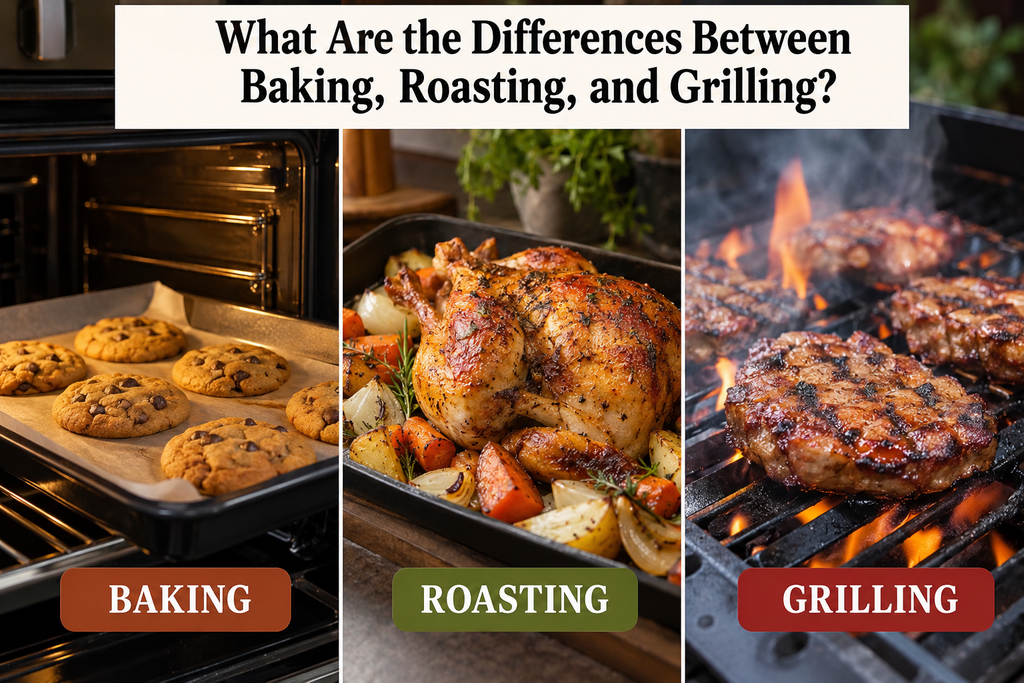
Comparison of Baking, Roasting, and Grilling
| Feature | Baking | Roasting | Grilling |
|---|---|---|---|
| Main heat source | Oven heat | Oven or open heat | Direct grill heat |
| Common foods | Bread, cakes, casseroles | Chicken, meat, vegetables | Kebabs, burgers, fish |
| Heat exposure | Surrounding heat | Surrounding dry heat | Strong, concentrated heat |
| Typical flavor | Mild or developed through baking | Rich and browned | Browned, sometimes smoky |
| Texture | Soft, firm, or crisp | Browned exterior | Seared or lightly charred |
| Equipment | Oven and baking pans | Oven and roasting tray | Gas, charcoal, or electric grill |
Which Cooking Method Is Healthier?
Many people want to know whether baking, roasting, or grilling is the healthiest cooking method.
The answer depends on the ingredients, amount of added fat, cooking temperature, and preparation technique.
All three methods can be part of a balanced diet because they can prepare food without deep frying.
Health Benefits of Baking
Baking often requires relatively little added oil, especially when using suitable baking pans or parchment paper.
For example, baked fish with lemon, herbs, and vegetables can provide a nutritious meal without requiring large amounts of cooking fat.
However, not every baked food is automatically healthy. Cakes, pastries, and biscuits may contain considerable amounts of sugar and saturated fat.
Health Benefits of Roasting
Roasting can prepare vegetables and lean meats using modest amounts of oil.
It also helps develop flavor naturally, reducing the need for heavy sauces.
Roasted carrots, cauliflower, and sweet potatoes can make vegetables more enjoyable while preserving many useful nutrients.
However, excessive roasting temperatures or very long cooking times may damage heat sensitive nutrients.
Health Benefits of Grilling
Grilling allows some fat to drip away from meat, particularly when using an open grill.
It can also produce appealing flavors without requiring much additional oil.
However, excessive charring and prolonged exposure to very high temperatures can produce potentially harmful compounds, particularly when cooking meat.
Using moderate heat, preventing flare ups, avoiding heavily blackened portions, and cooking food thoroughly are sensible practices.
Ultimately, a healthier meal depends more on ingredient quality, portion size, and overall preparation than on the cooking method alone.
What Foods Are Best for Baking?
Baking is particularly suitable for foods that need controlled heat and gradual cooking.
Bread, cakes, muffins, biscuits, and pastries are common examples.
Baking also works well for fish, pasta dishes, stuffed vegetables, and certain chicken recipes.
For example, a homemade vegetable casserole can be baked until its ingredients become tender and its surface develops a light golden color.
This method is convenient when preparing family meals because several ingredients can cook together in one ovenproof dish.
Baking can also be helpful for beginners because many recipes provide clear instructions for temperature and cooking time.
What Foods Are Best for Roasting?
Roasting works particularly well for ingredients that develop an appealing taste through browning.
Whole chicken, beef, lamb, potatoes, carrots, onions, and cauliflower are popular roasting choices.
For example, roasting potatoes with a small amount of olive oil, garlic, and herbs creates a flavorful side dish.
Roasting vegetables can also enhance their natural sweetness because heat encourages moisture loss and browning.
The method is especially useful when preparing large meals because several vegetables or larger cuts of meat can be cooked in an oven.
Using a roasting rack may also improve air circulation around certain foods.
What Foods Are Best for Grilling?
Grilling is ideal for foods that cook well under concentrated heat.
Chicken pieces, fish fillets, burgers, kebabs, and vegetables are common examples.
In Pakistani households, grilling is particularly popular for chicken tikka, seekh kebabs, and other barbecue dishes.
Vegetables such as bell peppers, mushrooms, onions, and zucchini can also be grilled.
For example, grilled chicken marinated with yogurt, lemon juice, garlic, and spices can develop a delicious flavor without requiring excessive oil.
Grilling is also suitable for outdoor gatherings because food can be prepared and served directly from the cooking area.
Common Mistakes to Avoid
Learning the differences between baking, roasting, and grilling also involves understanding common cooking mistakes.
One common baking mistake is opening the oven door repeatedly. This can cause temperature changes that affect delicate foods such as cakes.
Another mistake is placing food inside an oven before it has reached the required temperature.
During roasting, overcrowding the tray can prevent effective browning because moisture accumulates around the ingredients.
Leaving too little space between vegetables may cause them to steam instead of developing a roasted surface.
When grilling, one major mistake is using extremely high heat throughout the entire cooking process.
This may burn the outside while leaving the inside undercooked.
Using a food thermometer is particularly helpful when cooking poultry and thick pieces of meat. Poultry should reach a safe internal temperature of 74°C or 165°F.
Cleaning cooking equipment and preventing contact between raw and cooked food are also essential food safety practices.
How Can Beginners Choose the Right Cooking Method?
Choosing between baking, roasting, and grilling becomes easier when we consider the type of food and the result we want.
If the goal is to prepare bread, cake, or a dish requiring controlled heat, baking is usually the best option.
If we want vegetables or meat with a deeply browned surface, roasting may be more suitable.
If we prefer smoky flavors, quick surface browning, or traditional barbecue dishes, grilling can be an excellent choice.
Beginners should start with simple recipes and gradually experiment with different temperatures, seasonings, and cooking times.
It is also useful to observe how different ingredients respond to heat.
With regular practice, selecting an appropriate cooking method becomes a natural part of meal preparation.
Frequently Asked Questions
Is baking the same as roasting?
Baking and roasting both commonly use dry heat inside an oven. The main distinction is usually the type of food and desired cooking result. Baking is often associated with bread and cakes, while roasting commonly focuses on meat and vegetables.
Is grilling faster than baking?
Grilling can be faster for thin pieces of food because it exposes them to concentrated heat. However, cooking time depends on food thickness, heat intensity, and the equipment being used.
Can vegetables be baked, roasted, and grilled?
Yes. Vegetables can be prepared using all three methods. Baking can produce tender vegetables, roasting encourages browning, and grilling creates a distinctive surface flavor.
Does roasting require more oil than baking?
Not necessarily. Both methods can use small amounts of oil. The amount required depends on the ingredients, recipe, and cooking equipment.
Which method is best for chicken?
All three methods can produce delicious chicken. Baking is useful for controlled cooking, roasting is excellent for developing browned skin, and grilling provides a distinctive barbecue flavor.
Conclusion
Understanding the differences between baking, roasting, and grilling can improve everyday cooking skills and make meal preparation more enjoyable.
Baking is especially useful for foods requiring controlled, surrounding heat. Roasting is well suited to developing rich flavors and browned surfaces, while grilling uses concentrated heat to create distinctive textures and sometimes smoky aromas.
Each cooking method has its own advantages, and none is automatically better for every type of food.
The most suitable choice depends on the ingredients, available equipment, preferred flavor, and desired texture.
By learning how baking, roasting, and grilling work, home cooks can prepare a greater variety of meals, experiment with new recipes, and make better decisions in the kitchen. Simple knowledge of these cooking techniques can gradually turn everyday meal preparation into a more confident and enjoyable experience.


