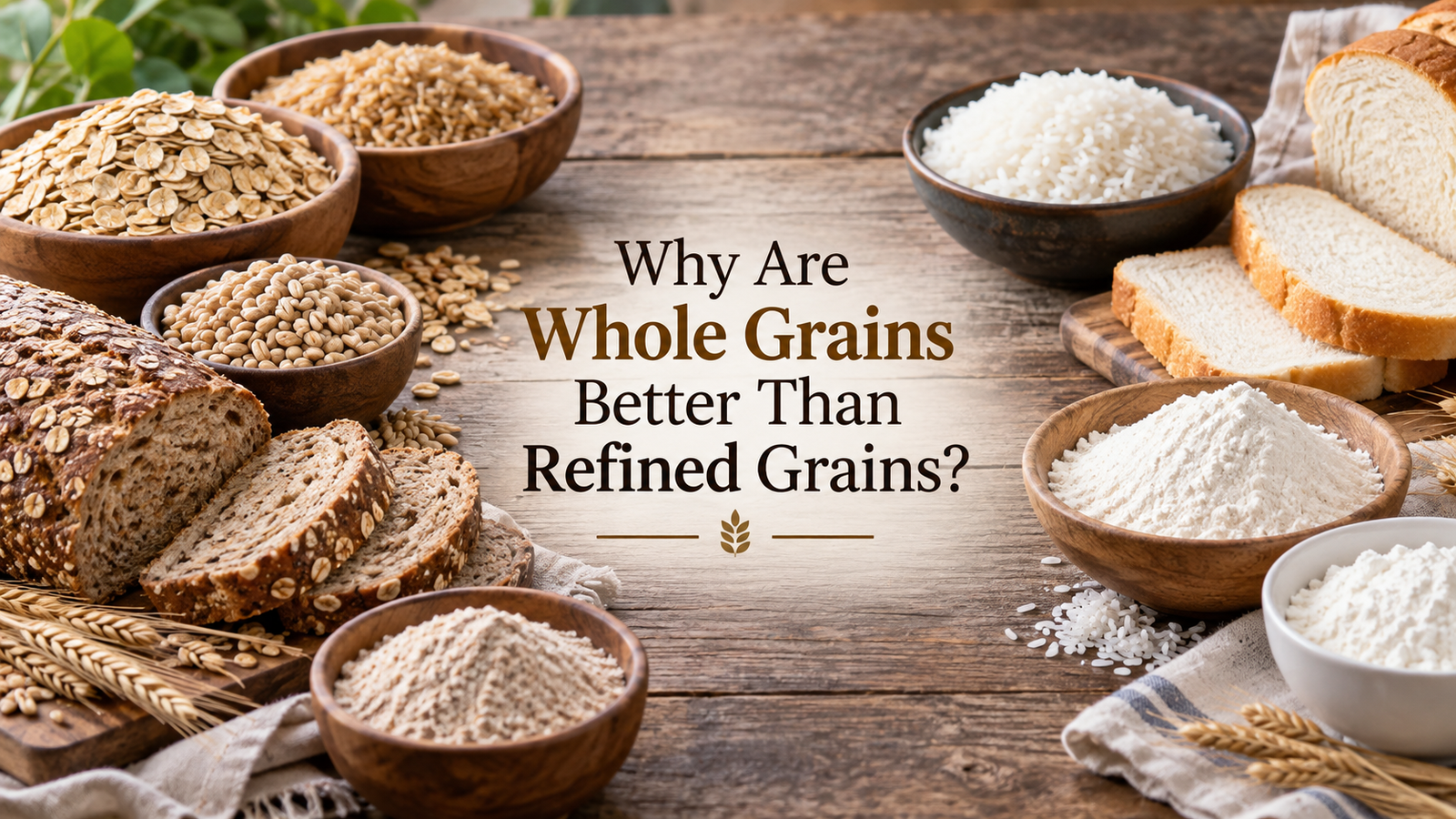
Grains are an important part of everyday nutrition because they provide energy, carbohydrates, vitamins, minerals, and other nutrients that help the body perform its daily activities. People around the world regularly eat foods made from wheat, rice, oats, barley, and corn. However, not all grain products offer the same nutritional value. The difference between whole grains and refined grains can significantly influence the quality of a person’s diet.
Whole grains are generally considered a healthier choice because they contain more natural fiber and retain important nutrients that are often reduced during food processing. Refined grains may look smoother, taste lighter, and cook faster, but the refining process removes certain valuable parts of the original grain.
Understanding why whole grains are better than refined grains can help people make informed food choices. A balanced diet does not require completely avoiding refined grains. Instead, it involves choosing nutritious foods more frequently and understanding how different grains contribute to overall health.
What Are Whole Grains?
Whole grains are grains that contain all three main parts of the original grain kernel. These parts are known as the bran, germ, and endosperm. Each part contains different nutrients that contribute to the nutritional value of the grain.
The bran is the outer protective layer. It contains dietary fiber, minerals, and several beneficial plant compounds.
The germ is the small inner portion that can develop into a new plant. It contains vitamins, minerals, healthy fats, and other nutrients.
The endosperm is the largest part of the grain. It mainly contains starch and provides energy through carbohydrates. It also contains some protein and other nutrients.
When these three parts remain in their natural proportions, the food is classified as a whole grain.
Common examples include whole wheat, brown rice, oats, barley, quinoa, and whole grain corn.
Whole grains can be eaten in their original form or used to prepare bread, breakfast cereals, flour, and other everyday foods.
What Are Refined Grains?
Refined grains are grains that have undergone processing to remove the bran and germ. This process changes their texture, appearance, cooking characteristics, and nutritional composition.
For example, white rice is produced by removing the outer layers of brown rice. Similarly, white flour is made by refining wheat and removing much of its bran and germ.
Refined grains usually have a softer texture and longer storage life because some natural oils found in the germ are removed.
However, the refining process also reduces the amount of dietary fiber and several naturally occurring vitamins and minerals.
Some refined grain products are enriched or fortified with nutrients such as iron and certain B vitamins. This improves their nutritional value, although it does not necessarily restore the original fiber and complete nutritional composition of whole grains.
Understanding this difference explains why nutrition experts generally recommend choosing whole grains more often.
Why Are Whole Grains Better Than Refined Grains?
The main nutritional advantage of whole grains comes from their fiber content and the wider variety of nutrients they retain.
Whole grains provide complex carbohydrates, dietary fiber, vitamins, minerals, and natural plant compounds. These components work together as part of a nutritious diet.
Refined grains also provide energy and can contribute useful nutrients, especially when enriched or fortified. However, whole grains generally offer more fiber and a broader range of naturally occurring nutrients.
Research has associated higher whole grain consumption with a lower risk of several chronic health conditions, particularly cardiovascular disease and type 2 diabetes.
The following benefits explain why replacing some refined grains with whole grains can improve everyday nutrition.
1. Whole Grains Provide More Dietary Fiber
Dietary fiber is one of the most important differences between whole grains and refined grains.
Fiber is a type of carbohydrate that the human body cannot fully digest. Rather than being broken down and absorbed like many other carbohydrates, it travels through the digestive system and performs several useful functions.
Whole grains naturally contain fiber because their bran remains intact.
Fiber helps support regular bowel movements and contributes to normal digestive function. It can also help people feel satisfied after eating.
For example, whole wheat bread usually contains more fiber than ordinary white bread. Brown rice also generally provides more fiber than white rice.
Eating fiber rich foods regularly can support digestive health and contribute to a balanced nutritional routine.
People who currently consume very little fiber should increase their intake gradually and drink sufficient water to reduce digestive discomfort.
2. Whole Grains Support Digestive Health
A healthy digestive system is important because it helps the body process food, absorb nutrients, and eliminate waste.
Whole grains contribute to digestive health through their natural fiber content.
Insoluble fiber adds bulk to stools and supports normal movement through the intestines. This can help prevent occasional constipation when combined with adequate hydration and other healthy habits.
Certain fibers in grains, particularly oats and barley, can also be used by beneficial microorganisms living in the intestines.
These microorganisms form part of the gut microbiome, which plays a role in digestion and other aspects of health.
A varied diet containing whole grains, vegetables, fruits, and legumes helps provide different types of fiber.
Although whole grains are useful for digestion, individual tolerance varies. Some people experience gas or bloating when increasing fiber consumption too quickly.
3. Whole Grains Help Maintain Steadier Blood Sugar Levels
Carbohydrates are an important energy source for the body. During digestion, many carbohydrates are broken down into glucose, which enters the bloodstream.
The speed of this process depends on several factors, including the grain’s structure, processing method, fiber content, portion size, and other foods eaten during the meal.
Some minimally processed whole grains are digested more slowly than highly refined grain products.
For example, intact barley and steel cut oats may produce a more gradual blood sugar response than certain highly processed breakfast cereals.
However, not every whole grain food has a low glycemic impact. Finely ground whole wheat flour and some processed whole grain products can still be digested relatively quickly.
The overall quality of the meal also matters.
Eating whole grains with vegetables, protein, and healthy fats can help create a more balanced meal.
Regularly choosing whole grains instead of refined grains is associated with a reduced risk of developing type 2 diabetes over time.
4. Whole Grains Are Beneficial for Heart Health
Heart health is strongly influenced by eating habits, physical activity, smoking, blood pressure, and other lifestyle factors.
Whole grains can form an important part of a heart healthy eating pattern.
Some whole grains contain soluble fiber, which helps lower cholesterol levels.
Oats and barley are especially valuable because they contain beta glucan, a type of soluble fiber that can help reduce LDL cholesterol when consumed in sufficient amounts.
LDL cholesterol is commonly called bad cholesterol because elevated levels contribute to the buildup of fatty deposits in blood vessels.
Whole grains also supply minerals and plant compounds that contribute to overall dietary quality.
Studies have consistently found an association between higher whole grain intake and a lower risk of cardiovascular disease.
Nevertheless, no single food guarantees protection against heart disease. The greatest benefits come from maintaining a balanced diet and following healthy daily habits.
5. Whole Grains Can Support Healthy Weight Management
Maintaining a healthy body weight involves balancing energy intake with physical activity and other factors.
Whole grains may support weight management because their fiber content contributes to feelings of fullness.
Foods containing fiber generally require more chewing and may help people feel satisfied after meals.
For example, a breakfast containing plain oatmeal, fruit, and yogurt may provide longer lasting satisfaction than a breakfast consisting mainly of sweetened refined cereal.
This does not mean whole grains automatically cause weight loss.
Whole grain foods still contain calories, and portion sizes remain important.
A whole wheat biscuit containing large amounts of sugar and fat may not be a better everyday choice than a simpler, less processed alternative.
Choosing whole grains alongside vegetables, fruits, lean proteins, and appropriate portions can make healthy eating easier to maintain.
6. Whole Grains Contain Important Vitamins and Minerals
Whole grains naturally contain several vitamins and minerals that support normal body functions.
Many of these nutrients are concentrated in the bran and germ, which are removed during refining.
Whole grains can provide B vitamins, magnesium, phosphorus, manganese, iron, and zinc.
B vitamins help the body use energy from food and contribute to normal nervous system function.
Magnesium supports muscle and nerve function and participates in numerous chemical reactions within the body.
Iron is necessary for producing hemoglobin, which carries oxygen in the blood.
Zinc contributes to immune function and normal growth and repair.
The exact nutritional content varies among different grain varieties.
Although enriched refined grains can provide substantial amounts of added vitamins and minerals, whole grains retain a wider range of naturally occurring nutrients.
7. Whole Grains Provide Beneficial Plant Compounds
Whole grains contain more than carbohydrates, fiber, vitamins, and minerals.
They also provide various naturally occurring plant compounds, including phenolic acids and other substances with antioxidant activity.
Antioxidants help protect cells from certain forms of oxidative damage.
Whole grains contain some of these compounds in their outer layers, particularly the bran.
When grains are refined, a substantial portion of these components may be removed.
However, researchers continue to study how individual plant compounds influence human health.
The health benefits associated with whole grains probably result from several nutrients and food components working together rather than from one specific substance.
This is another reason why eating a variety of minimally processed plant foods is valuable.
8. Whole Grains May Reduce the Risk of Certain Chronic Diseases
Long term eating habits can influence the likelihood of developing certain chronic diseases.
Observational studies have linked regular whole grain consumption with a lower risk of cardiovascular disease, type 2 diabetes, and colorectal cancer.
One possible explanation involves the combined effects of fiber, vitamins, minerals, and natural plant compounds.
Dietary fiber may influence bowel function, cholesterol levels, and blood sugar regulation.
Whole grain consumption may also be associated with other healthy lifestyle behaviors, so observational findings do not prove that whole grains alone prevent disease.
Still, the overall scientific evidence supports choosing whole grains as part of a balanced eating pattern.
Whole grains should be viewed as one component of healthy nutrition rather than as a treatment or guaranteed method of preventing illness.
Whole Grains vs Refined Grains: Understanding the Differences
The following comparison highlights the main nutritional differences between the two types of grains.
| Nutritional Feature | Whole Grains | Refined Grains |
|---|---|---|
| Grain structure | Contains bran, germ, and endosperm | Bran and germ are removed |
| Fiber content | Generally higher | Generally lower |
| Vitamins and minerals | Retains more natural nutrients | Some nutrients are reduced during refining |
| Digestion | Often slower in minimally processed forms | Often faster in highly processed forms |
| Fullness | Fiber may support greater satisfaction | Usually provides less fiber |
| Examples | Brown rice, oats, whole wheat | White rice, white flour, many refined cereals |
These differences show why whole grains are generally preferred for everyday nutrition.
However, the nutritional quality of individual products also depends on added sugar, sodium, fats, enrichment, and the amount of processing.
What Are the Best Whole Grains to Include in Your Diet?
There are several nutritious whole grains that can easily become part of regular meals.
Oats: Oats contain soluble fiber and are commonly eaten as porridge or oatmeal. Plain oats are a practical breakfast choice.
Brown rice: Brown rice retains the bran and germ, providing more fiber than white rice.
Whole wheat: Whole wheat flour can be used to prepare chapati, bread, and other commonly eaten foods.
Barley: Barley contains beta glucan fiber and can be added to soups, salads, and grain dishes.
Quinoa: Quinoa is technically a seed but is commonly treated as a whole grain in nutrition. It provides fiber, minerals, and protein.
Whole grain corn: Corn can contribute fiber and other nutrients when eaten in whole grain forms.
Eating different whole grains helps provide a wider variety of nutrients and makes meals more interesting.
How Can You Replace Refined Grains With Whole Grains?
Switching to whole grains does not require changing every meal immediately.
Small adjustments can make a meaningful difference over time.
Someone who regularly eats white bread can begin by choosing genuine whole wheat bread for some meals.
White rice can occasionally be replaced with brown rice or mixed with brown rice during preparation.
Breakfast cereals can be replaced with plain oats or cereals that list whole grains among their main ingredients.
For people who regularly eat chapati, using whole wheat atta provides a convenient way to include whole grains in the daily diet.
Whole grain pasta is another practical alternative to ordinary refined pasta.
These changes are easier to maintain when they match personal taste, food availability, and household preferences.
How to Identify Genuine Whole Grain Products
Food packaging can sometimes make grain products appear healthier than they actually are.
Terms such as multigrain, wheat bread, and natural do not necessarily mean that a product is made primarily from whole grains.
A multigrain bread may contain several different grains, but some or all of them could be refined.
The ingredient list provides more useful information.
Look for ingredients such as whole wheat flour, whole oats, whole grain rye, or brown rice.
Ideally, a whole grain ingredient should appear near the beginning of the list.
It is also useful to examine the nutritional information for fiber, added sugar, and sodium.
A product can contain whole grains while still having considerable amounts of added sugar or salt.
Choosing simpler products with recognizable ingredients can support better everyday food decisions.
Are Refined Grains Always Unhealthy?
Refined grains are not automatically unhealthy, and there is no need to completely eliminate them from a balanced diet.
White rice, ordinary pasta, and refined flour products can provide energy and may fit into nutritious meals.
In many countries, refined grains are enriched or fortified to help improve the population’s intake of certain nutrients.
Refined grains may also be easier for some people to tolerate during specific digestive conditions.
The more important issue is the overall balance of the diet.
A meal containing white rice, vegetables, lentils, and fish can still provide valuable nutrition.
However, relying almost entirely on refined grain products may reduce overall fiber intake.
For most people, replacing a reasonable portion of refined grains with whole grains is a practical approach.
How Much Whole Grain Should You Eat Daily?
A common dietary recommendation is to make at least half of the grains you eat whole grains.
For an eating pattern that includes approximately six ounce equivalents of grains daily, this would mean choosing around three ounce equivalents from whole grains.
One ounce equivalent may be represented by a slice of bread or approximately half a cup of cooked rice or oatmeal, although exact portions differ by food.
Individual needs depend on age, activity level, calorie requirements, and other factors.
The main goal is to include whole grains regularly while maintaining an appropriate balance of vegetables, fruits, protein sources, and healthy fats.
People who are new to high fiber foods may benefit from increasing whole grain consumption gradually.
Frequently Asked Questions
Are whole grains healthier than white rice?
Whole grains generally contain more fiber and natural nutrients than white rice. However, white rice can still be included in balanced meals, particularly when combined with vegetables and protein sources.
Is whole wheat bread better than white bread?
Whole wheat bread usually provides more fiber and retains more naturally occurring grain nutrients. The healthiest option also depends on ingredients, added sugar, and sodium content.
Can whole grains help with constipation?
Whole grains can support regular bowel movements because they contain dietary fiber. Drinking sufficient water and gradually increasing fiber consumption are also important.
Are oats considered whole grains?
Yes. Plain oats are whole grains and provide valuable nutrients, including beta glucan soluble fiber. They are a convenient option for breakfast and other meals.
Can people eat whole grains every day?
Most people can include whole grains in their daily diets. Individuals with celiac disease must avoid gluten containing grains such as wheat, barley, and rye, but can choose appropriate certified gluten free whole grain products.
Conclusion
Whole grains are generally better than refined grains because they retain the bran, germ, and endosperm, providing more dietary fiber and a wider range of naturally occurring nutrients.
Their nutritional composition supports digestive health, helps with cholesterol management, and contributes to overall dietary quality. Regular whole grain consumption is also associated with a lower risk of several chronic diseases.
Refined grains can still be part of a healthy eating pattern, but making whole grains a more frequent choice is a sensible nutritional improvement.
Simple habits such as eating plain oatmeal, choosing whole wheat chapati, adding barley to meals, and occasionally replacing white rice with brown rice can improve the variety and quality of everyday nutrition.
Ultimately, healthy eating is not about depending on one particular food. It is about making consistent choices that provide the body with the nutrients it needs for long term health and well being.