
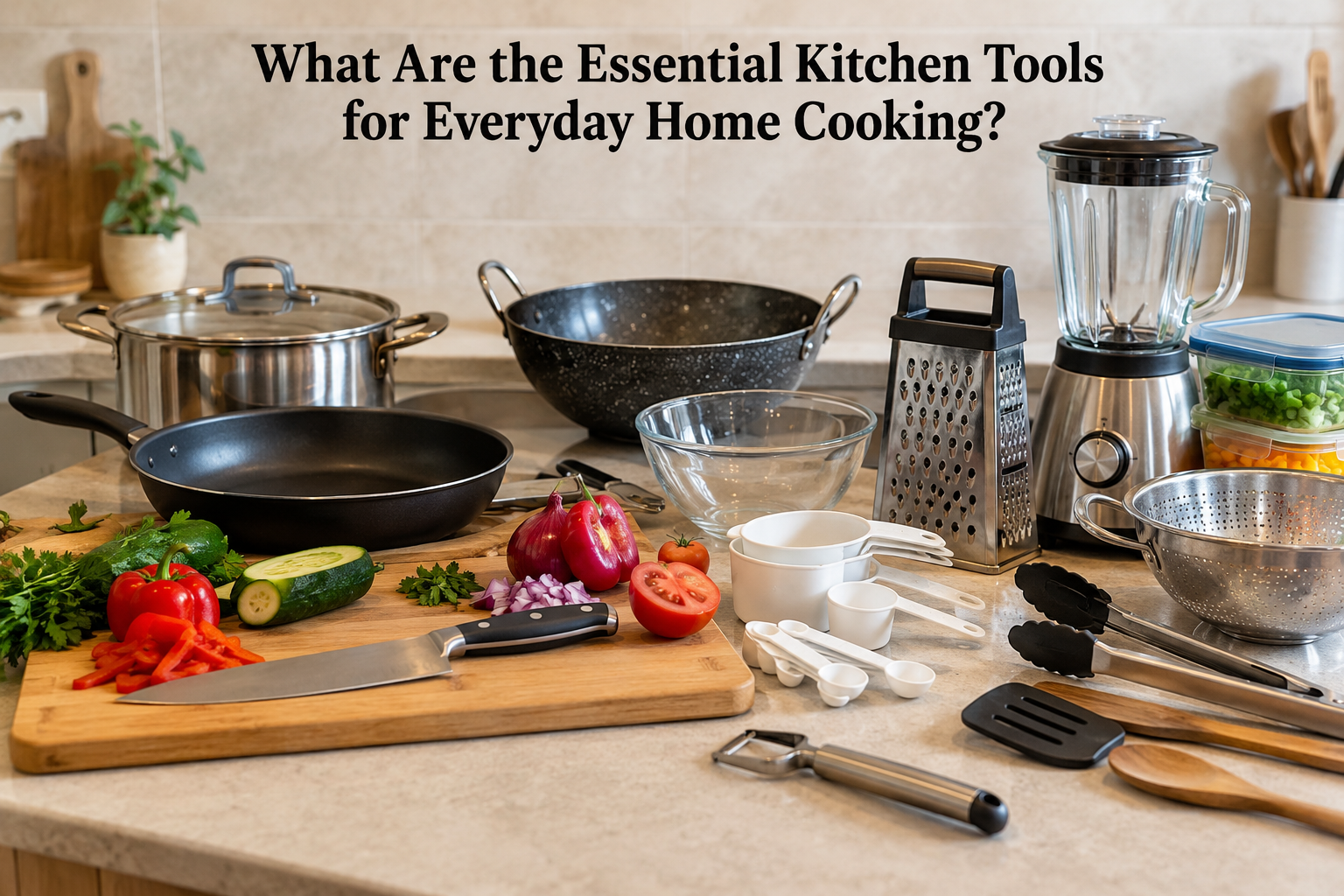
Cooking at home becomes easier when you have the right kitchen tools. Whether you are preparing breakfast, making lunch for your family, or cooking dinner after a busy day, simple kitchen equipment can make a big difference. You do not need an expensive collection of appliances or professional cooking equipment to prepare delicious meals. A few carefully selected tools are enough to handle most everyday cooking tasks.
Many beginners believe that a well equipped kitchen must contain dozens of gadgets. However, having too many unnecessary items can make cooking more complicated. The most useful kitchen tools are those that help you prepare ingredients, cook food safely, and clean your kitchen without difficulty.
Understanding the essential kitchen tools for everyday home cooking can help you save money, reduce preparation time, and develop better cooking habits. This guide explains the most important kitchen tools, their uses, and how to choose equipment that will serve your needs for years.
1. A Good Quality Chef’s Knife
A chef’s knife is one of the most important tools in any home kitchen. It is used for cutting vegetables, slicing fruits, chopping herbs, and preparing meat.
A sharp knife allows you to work more accurately and comfortably. It also makes food preparation faster because you do not need to apply excessive pressure while cutting ingredients.
When choosing a chef’s knife, look for a comfortable handle and a blade that feels balanced in your hand. A medium sized knife is usually suitable for most household cooking activities.
Stainless steel knives are popular because they are durable and relatively easy to maintain.
Always wash your knife carefully after use, dry it properly, and store it in a safe place. Regular sharpening is also important because a dull knife can slip during cutting.
2. A Strong and Reliable Cutting Board
A cutting board provides a stable surface for preparing food. It protects your kitchen countertop and helps you cut ingredients more safely.
Cutting boards are commonly available in wood, bamboo, and plastic materials. Each material has advantages depending on your cooking habits.
Plastic boards are often convenient because many can be cleaned in a dishwasher. Wooden boards are durable when maintained properly.
It is helpful to keep separate cutting boards for raw meat and ready to eat ingredients such as vegetables, fruits, and bread.
This simple practice reduces the risk of cross contamination during meal preparation.
Choose a cutting board that is large enough for everyday use and does not move easily while cutting. A damp kitchen towel placed underneath can help prevent slipping.
3. A Nonstick Frying Pan
A frying pan is essential for preparing many everyday dishes. You can use it to cook eggs, vegetables, pancakes, fish, and several other meals.
A nonstick frying pan is particularly useful for beginners because food is less likely to stick to the cooking surface.
It also allows you to prepare certain dishes with a smaller amount of cooking oil.
When selecting a frying pan, consider the size of your family and the type of stove you use.
A medium sized pan is generally suitable for preparing breakfast or cooking small portions.
Use wooden or silicone utensils to protect the nonstick coating. Avoid overheating an empty nonstick pan, and replace the pan if its coating becomes damaged or starts peeling.
4. A Stainless Steel Cooking Pot
A cooking pot is another basic kitchen tool that every household should have.
It is useful for boiling water, preparing rice, cooking pasta, making soup, and preparing different vegetables.
Stainless steel pots are commonly preferred because they are strong, long lasting, and suitable for many cooking methods.
A pot with a thick base distributes heat more evenly and helps reduce the chances of burning food.
Choose a pot with a comfortable handle and a properly fitting lid. The lid helps retain moisture and heat during cooking.
For small families, a medium sized cooking pot is often enough for daily meals. Larger households may need additional pots for preparing bigger portions.
5. A Deep Cooking Pan or Wok
A deep cooking pan or wok is particularly useful for preparing meals that involve stirring, frying, or cooking several ingredients together.
It can be used for vegetable dishes, noodles, curries, and many traditional home cooked recipes.
In Pakistani households, a karahi is a familiar example of a deep cooking pan.
Its shape makes it convenient for mixing ingredients and preparing dishes that contain sauces or gravy.
A deep pan also provides additional space, which helps prevent ingredients from spilling during cooking.
Choose a pan that is easy to lift and suitable for your stove. A strong base and comfortable handles can make daily cooking more convenient.
6. Measuring Cups and Measuring Spoons
Measuring ingredients correctly is an important part of successful cooking.
Measuring cups and spoons help you add suitable amounts of flour, water, milk, oil, salt, and spices.
These tools are especially helpful when you are following a new recipe or learning to prepare baked foods.
Using measurements also improves consistency because you can repeat a recipe with similar results.
For example, measuring rice and water can help you prepare rice with a more predictable texture.
A basic set of measuring cups and spoons is inexpensive and takes very little storage space.
For baking, a digital kitchen scale can provide even better accuracy, especially when measuring flour and other dry ingredients.
7. A Vegetable Peeler
A vegetable peeler is a small but useful kitchen tool that simplifies everyday food preparation.
It helps remove the outer skin of potatoes, carrots, cucumbers, and other vegetables.
Compared with using a large knife, a peeler can make this task easier and reduce unnecessary food waste.
A good vegetable peeler should have a comfortable handle and a sharp blade that moves smoothly across the vegetable surface.
Some peelers also include a small pointed section for removing marks from potatoes.
After using a peeler, wash it carefully and allow it to dry.
Although it may seem like a minor kitchen accessory, it can save considerable preparation time when cooking vegetables regularly.
8. Mixing Bowls for Food Preparation
Mixing bowls are important for combining ingredients before cooking.
They can be used for preparing salads, mixing dough, marinating meat, beating eggs, and combining spices.
Having two or three bowls in different sizes makes everyday cooking more organized.
Small bowls are useful for holding chopped herbs and spices, while larger bowls are suitable for preparing dough or mixing salad ingredients.
Stainless steel bowls are durable and lightweight. Glass bowls are another practical option because they are easy to clean and allow you to see the ingredients.
Choose bowls that are stable and easy to handle.
Using separate bowls for raw meat and ready to eat food also supports better kitchen hygiene.
9. A Spatula and Cooking Spoon
Spatulas and cooking spoons are among the most frequently used kitchen utensils.
A spatula helps you turn eggs, pancakes, fish, and other foods while cooking.
A cooking spoon is useful for stirring soups, curries, sauces, and vegetables.
Silicone spatulas are flexible and often suitable for nonstick cookware. Wooden spoons are also popular because they are gentle on cooking surfaces.
Metal utensils can be useful with stainless steel cookware, but they may damage delicate nonstick coatings.
Choose utensils with comfortable handles that are designed to tolerate normal cooking temperatures.
Keeping a few reliable utensils near your stove can make cooking more efficient and prevent unnecessary interruptions.

10. A Colander or Kitchen Strainer
A colander is a bowl shaped kitchen tool containing small holes that allow water to drain away.
It is commonly used for draining pasta, washing vegetables, rinsing fruits, and removing excess water from boiled ingredients.
A fine mesh strainer is slightly different because it can hold smaller ingredients such as lentils, tea leaves, and certain grains.
Both tools can be useful in an everyday kitchen.
For example, after washing vegetables, a colander allows extra water to drain before you start cutting or cooking.
Stainless steel and food grade plastic strainers are widely available.
Select a size that matches your household needs and can be cleaned easily after use.
11. Kitchen Tongs for Safe Food Handling
Kitchen tongs help you hold, lift, and turn food without touching it directly.
They are particularly useful when frying, grilling, or handling hot ingredients.
You can use tongs to turn chicken pieces, lift cooked vegetables, serve salad, or remove food from a hot pan.
Tongs provide better control than ordinary spoons for many cooking activities.
Stainless steel tongs are durable, while silicone tipped tongs are often suitable for nonstick cookware.
Choose tongs that are comfortable to hold and easy to open and close.
Keep separate utensils for raw and cooked meat, or wash them thoroughly between uses, to prevent cross contamination.
12. A Grater for Everyday Ingredients
A grater is helpful for preparing ingredients that need to be finely shredded.
It can be used for cheese, carrots, ginger, and certain other vegetables.
Grated ingredients often mix more evenly into recipes and may cook faster because they are divided into smaller pieces.
A box grater usually includes several grating surfaces, allowing you to produce different textures.
A smaller handheld grater may be sufficient if you mainly prepare ginger, garlic, or cheese.
Choose a grater with a stable base and a comfortable handle.
Always keep your fingers away from the sharp grating surface, especially when working with small pieces of food.
13. A Blender or Food Processor
A blender can make home cooking more convenient by helping you prepare sauces, smoothies, soups, and certain liquid mixtures.
It is especially useful for blending tomatoes, preparing fruit drinks, and making smooth sauces.
A food processor performs additional tasks such as chopping vegetables and mixing certain ingredients.
However, beginners do not necessarily need both appliances.
If you mainly prepare simple meals, a basic blender may be enough.
Choose an appliance that matches your cooking needs rather than purchasing equipment with features you may rarely use.
Follow the manufacturer’s instructions, particularly when blending hot ingredients, because trapped steam can create pressure and cause burns.
14. Food Storage Containers
Food storage containers are essential for keeping ingredients organized and storing prepared meals.
They help protect food from contamination and make better use of refrigerator and cupboard space.
Containers with properly fitting lids are particularly useful for storing dry ingredients such as rice, flour, sugar, and lentils.
Refrigerator safe containers can be used for cooked meals and leftovers.
Transparent containers allow you to identify ingredients without opening every lid.
Choose food grade containers that are easy to wash and suitable for their intended use.
Labeling leftovers with their preparation dates can also help you manage food more safely and reduce unnecessary waste.
15. A Digital Food Thermometer
A digital food thermometer is a useful kitchen tool that many beginners overlook.
It helps you check whether meat, poultry, and other foods have reached a safe internal temperature.
Food may appear fully cooked on the outside while remaining undercooked inside.
A thermometer provides a more reliable way to check doneness than relying only on color or appearance.
For example, poultry should reach an internal temperature of 74°C or 165°F.
Insert the thermometer into the thickest part of the food without touching bone.
Clean the thermometer probe after each use according to the manufacturer’s instructions.
This simple tool can improve cooking confidence and support better food safety practices.
How to Choose the Best Kitchen Tools for Your Home
Buying kitchen equipment should be based on your cooking habits, available space, and budget.
Start with tools that you will use almost every day. A knife, cutting board, frying pan, cooking pot, spoon, and mixing bowl are excellent starting points.
Once you become more comfortable with cooking, you can gradually add other equipment.
Before purchasing any kitchen tool, consider how easy it is to clean, whether it fits your available storage space, and how often you are likely to use it.
Durability is another important factor. A reasonably priced tool that performs well for several years can provide better value than a cheaper product that needs frequent replacement.
Avoid buying kitchen gadgets simply because they look attractive. Practical tools that solve everyday cooking problems are usually the best investment.
How to Maintain Kitchen Tools Properly
Proper maintenance helps kitchen tools remain safe, clean, and useful for longer.
Wash utensils after use, especially when they have touched raw meat, poultry, or seafood. Dry metal equipment thoroughly to reduce rust and moisture damage.
Keep knives sharp and store them safely. Avoid using abrasive cleaning materials on nonstick cookware.
Inspect wooden utensils and cutting boards regularly. Replace items that develop deep cracks or damage that makes effective cleaning difficult.
Electrical appliances should be cleaned and stored according to their manufacturer’s instructions.
A clean, organized kitchen also makes it easier to find equipment and prepare meals without wasting time.
Frequently Asked Questions
What kitchen tools should a beginner buy first?
Beginners should start with a chef’s knife, cutting board, frying pan, cooking pot, spatula, mixing bowl, and measuring cups. These basic tools can handle many everyday cooking activities.
Are expensive kitchen tools necessary for home cooking?
No. Expensive equipment is not necessary for preparing good meals. Affordable, durable, and easy to maintain kitchen tools are often sufficient for everyday home cooking.
What is the most important kitchen tool?
A good quality chef’s knife is one of the most important kitchen tools because it is used for many preparation tasks, including chopping vegetables, slicing fruits, and cutting ingredients.
How many cooking pots and pans does a small family need?
A small family can often begin with one frying pan, one medium cooking pot, and one deep cooking pan. Additional cookware can be purchased according to cooking habits and family size.
How can I organize kitchen tools in a small kitchen?
Keep frequently used tools close to the cooking area, store smaller utensils in drawers, and use cabinets or shelves for larger equipment. Remove unnecessary gadgets to create more usable space.
Conclusion
Having the essential kitchen tools for everyday home cooking can make meal preparation simpler, safer, and more enjoyable. You do not need a large collection of expensive appliances to cook satisfying meals at home.
A reliable knife, cutting board, frying pan, cooking pot, measuring tools, and basic utensils can support most daily cooking needs. Additional items such as a blender, food thermometer, and storage containers can improve convenience as your cooking experience develops.
The best approach is to begin with practical equipment, learn how to use each tool properly, and gradually expand your kitchen collection.
When your kitchen contains the right tools and everything has a proper place, preparing homemade meals becomes a more comfortable and manageable part of everyday life.


