
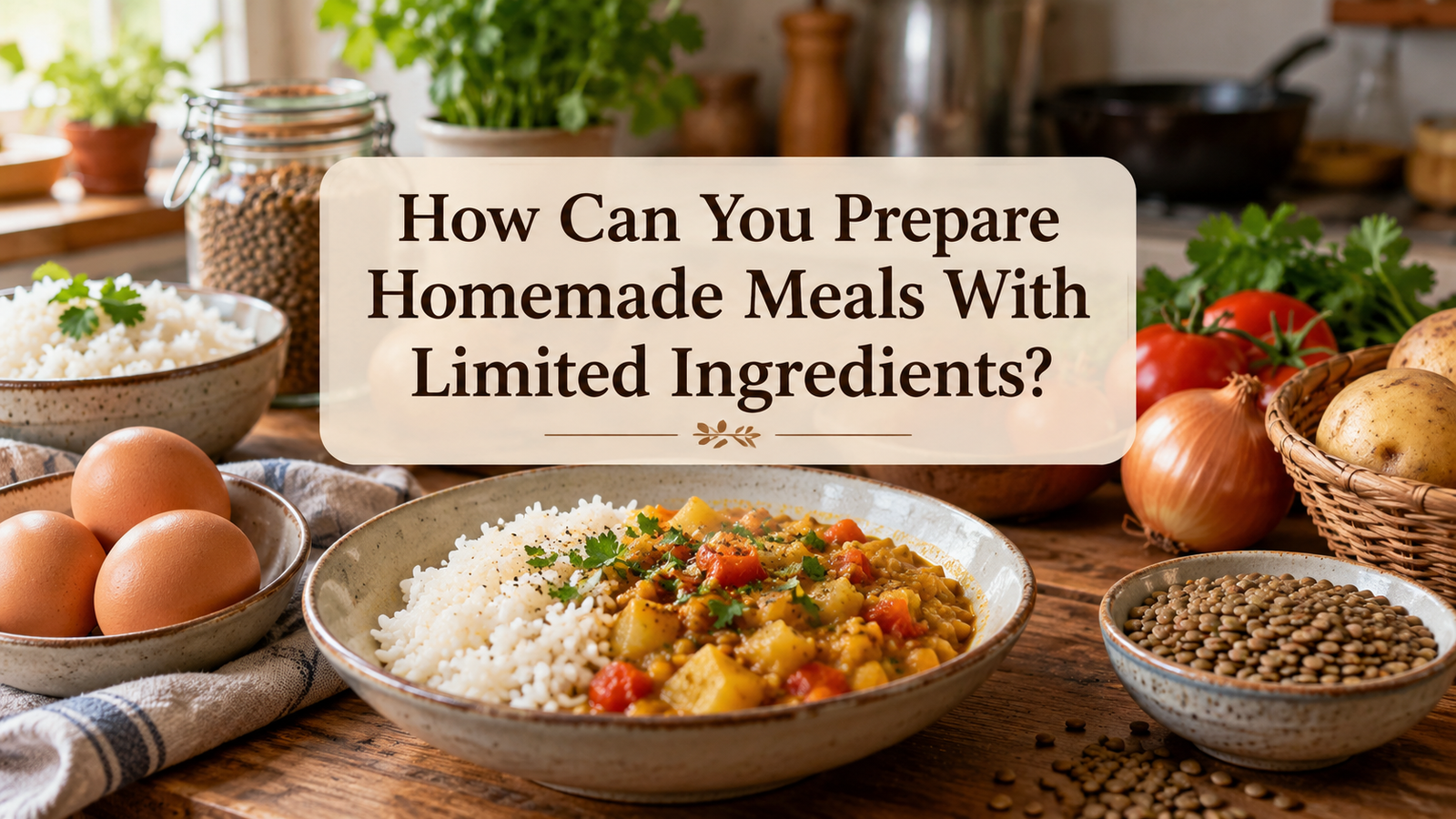
Preparing delicious homemade meals does not always require a long shopping list or expensive ingredients. Many people believe that cooking a satisfying meal means having a kitchen full of vegetables, spices, sauces, and special cooking tools. However, some of the most enjoyable meals can be prepared with only a few basic ingredients.
Learning how to prepare homemade meals with limited ingredients is a practical skill that can save money, reduce food waste, and make everyday cooking easier. Whether you are living alone, managing a family budget, or trying to use what is already available in your kitchen, simple cooking methods can help you prepare nutritious and flavorful meals.
The secret is not having more ingredients. It is understanding how to combine basic foods, use simple cooking techniques, and plan meals according to what you already have.
In this article, we will explore practical ways to prepare homemade meals with limited ingredients while maintaining good taste, nutrition, and convenience.
1. Start by Checking the Ingredients You Already Have
Before deciding what to cook, take a few minutes to examine your kitchen shelves, refrigerator, and freezer.
You may already have enough ingredients to prepare several different meals without visiting a grocery store.
Common kitchen ingredients include:
- Rice
- Flour
- Eggs
- Potatoes
- Onions
- Tomatoes
- Lentils
- Cooking oil
- Salt
- Basic spices
These ingredients can be used in different combinations to prepare breakfast, lunch, and dinner.
For example, potatoes, onions, and eggs can become a simple breakfast omelet. Rice and lentils can be cooked together to make a satisfying meal. Flour and potatoes can also be used to prepare homemade flatbread with a vegetable filling.
Checking available ingredients first helps you avoid unnecessary purchases and encourages creativity.
It also prevents food from being forgotten in the refrigerator until it becomes unsuitable for eating.
2. Choose Simple Recipes That Need Few Ingredients
One of the easiest ways to cook with limited ingredients is to select recipes that naturally require only a few items.
Some recipes involve complicated preparation, but many everyday dishes are surprisingly simple.
For example, a basic potato curry can be prepared using potatoes, onions, tomatoes, oil, salt, and a few spices.
Similarly, scrambled eggs can be made with eggs, oil, salt, and black pepper.
Other easy homemade meal ideas include:
- Vegetable fried rice
- Lentil soup
- Potato sandwiches
- Egg fried rice
- Tomato pasta
- Homemade vegetable soup
- Simple chicken curry
The important thing is to focus on recipes that match your available ingredients rather than purchasing something new for every meal.
A simple recipe can taste excellent when the ingredients are cooked carefully.
3. Use Basic Ingredients in Different Ways
A useful cooking habit is learning how one ingredient can be used in several dishes.
This allows you to prepare different homemade meals without buying a large variety of food.
Consider potatoes as an example.
Potatoes can be boiled, roasted, mashed, or cooked with vegetables. They can also be added to soups, curries, and sandwiches.
Eggs offer similar flexibility. You can boil them, scramble them, prepare an omelet, or mix them with cooked rice.
Rice can be served plain, cooked with lentils, mixed with vegetables, or turned into fried rice.
By understanding the different uses of ordinary ingredients, you can create more meal options with fewer groceries.
This approach is especially helpful for students, busy families, and people working with a limited food budget.
4. Plan Meals Around What You Have
Meal planning becomes much easier when you start with available ingredients instead of complicated recipes.
Suppose you have rice, eggs, potatoes, onions, and tomatoes.
You could prepare the following meals:
| Meal | Simple homemade dish |
|---|---|
| Breakfast | Onion and tomato omelet |
| Lunch | Potato curry with rice |
| Dinner | Egg fried rice with onions |
| Next breakfast | Boiled eggs and roasted potatoes |
This is a simple example of how a few ingredients can support different meals.
However, when planning meals for several days, try to include vegetables, fruits, protein sources, and other nutritious foods whenever possible.
Limited ingredient cooking should still support balanced eating.
Planning meals also helps you estimate portions and avoid cooking more food than your family needs.
5. Make Simple Meals More Flavorful With Basic Spices
Good flavor does not always depend on expensive sauces or unusual seasonings.
Basic spices can make ordinary ingredients more enjoyable.
Salt, black pepper, cumin, turmeric, and chili powder are commonly used in many homemade dishes.
For example, boiled potatoes can taste much better when lightly cooked with onions, cumin, and a little salt.
Similarly, lentils become more flavorful when cooked with garlic, turmeric, and onions.
The cooking method also influences flavor.
Gently frying onions until they become golden can create a rich taste. Roasting vegetables can bring out their natural sweetness.
Even a simple dish can become satisfying when you pay attention to seasoning and cooking time.
Start with small amounts of spices and adjust according to your taste.
6. Prepare Rice Based Meals for Easy Cooking
Rice is one of the most useful ingredients for preparing homemade meals with limited ingredients.
It is widely available, affordable in many areas, and easy to combine with vegetables, eggs, lentils, and meat.
One simple option is vegetable rice.
Cook rice separately and allow it to cool slightly. In another pan, heat a little oil and add chopped onions and any available vegetables.
Cook until the vegetables are tender, then add the rice and season with salt and pepper.
Mix everything carefully and serve warm.
You can also prepare egg fried rice by adding cooked eggs to the mixture.
Another option is rice with lentils, which provides a combination of carbohydrates, plant protein, and fiber.
Rice based meals are convenient because the basic recipe can be adjusted according to whatever ingredients are available.
7. Learn to Cook With Eggs
Eggs are particularly useful when your kitchen has only a few ingredients.
They cook quickly and provide protein along with important vitamins and minerals.
A basic omelet requires eggs, salt, and a little cooking oil.
If onions, tomatoes, or green chilies are available, you can add them for extra flavor.
Boiled eggs can also be served with bread, rice, or cooked vegetables.
Another easy meal is an egg and potato skillet.
Start by cooking small potato pieces in a covered pan with a little oil and water until tender. Add onions if available, then pour beaten eggs over the potatoes.
Cook until the eggs are fully set.
This dish requires very few ingredients and can be enjoyed at breakfast or dinner.
Eggs are a practical choice when you need a quick homemade meal without complicated preparation.
8. Use Lentils and Beans for Affordable Meals
Lentils and beans are valuable ingredients for people who want to prepare budget friendly homemade meals.
They provide plant protein, fiber, and several essential nutrients.
Lentils can be cooked with water, salt, turmeric, and onions to prepare a basic lentil soup or curry.
For a thicker dish, reduce the amount of water during cooking.
For a lighter soup, add more water and allow the lentils to simmer until soft.
Cooked beans can also be mixed with rice, potatoes, or vegetables.
Dried beans generally need soaking and proper cooking before eating. Kidney beans, in particular, must be boiled thoroughly because undercooked beans can contain harmful natural toxins.
Using lentils and beans regularly can help you create satisfying meals without depending on meat every day.
9. Turn Leftover Ingredients Into New Meals
One of the smartest ways to prepare homemade meals with limited ingredients is to make good use of leftovers.
Instead of throwing away small portions of cooked food, consider how they can become part of another dish.
For example, leftover rice can be turned into vegetable fried rice.
Cooked chicken can be added to soup, sandwiches, or rice dishes.
Leftover vegetables can be used in omelets or mixed with pasta.
Mashed potatoes can become potato patties with the addition of flour and seasonings.
However, food safety is essential when reusing leftovers.
Refrigerate perishable cooked food within two hours, or within one hour when the surrounding temperature is above 32°C.
Most cooked leftovers should be used within three to four days when stored properly in a refrigerator at 4°C or below. Reheat leftovers thoroughly to 74°C.
Using leftovers safely reduces waste and saves preparation time.
10. Keep a Small Collection of Essential Pantry Foods
A well organized pantry makes limited ingredient cooking much easier.
You do not need dozens of different food products.
Instead, focus on a few versatile ingredients that can be used regularly.
Useful pantry foods include rice, flour, dried lentils, pasta, canned tomatoes, cooking oil, and basic seasonings.
Frozen vegetables can also be convenient because you can use small portions without preparing an entire fresh vegetable at once.
When shopping, consider the foods your household eats most often.
Buying large quantities of ingredients that you rarely use may increase waste rather than reduce expenses.
A small collection of familiar ingredients is often more helpful than a cupboard full of products that remain unused.
11. Use Simple Cooking Methods to Save Time
Cooking techniques can make a noticeable difference when ingredients are limited.
Boiling, steaming, roasting, and cooking ingredients together in one pot are all practical methods.
One pot meals are especially convenient because they require less equipment and reduce cleanup.
For example, you can prepare a simple rice and lentil dish by cooking both ingredients together with water and basic seasonings.
A potato and vegetable soup can also be prepared in one cooking pot.
Roasting is another useful technique.
Potatoes, carrots, onions, and other available vegetables can be roasted with a small amount of oil and seasoning.
These cooking methods help you make the most of ordinary ingredients without spending unnecessary time in the kitchen.
12. Balance Nutrition Even With Limited Ingredients
Preparing meals with fewer ingredients does not mean ignoring nutrition.
A healthy meal should ideally include a source of protein, carbohydrates, and vegetables or fruit.
For example, rice with lentils and cooked vegetables offers a more balanced combination than plain rice alone.
An omelet with whole wheat bread and tomatoes can also provide a useful mixture of nutrients.
Potatoes are a source of carbohydrates, while eggs, lentils, beans, chicken, and yogurt can contribute protein.
Try to include different food groups throughout the day, even when every meal cannot contain everything.
Drinking enough water and choosing appropriate portions are also important parts of healthy eating.
Variety across the week matters more than trying to make every individual meal perfect.
13. Avoid Common Mistakes When Cooking With Few Ingredients
Limited ingredient cooking is simple, but a few mistakes can affect the results.
One common mistake is using too much salt to compensate for missing ingredients.
Instead, improve flavor with onions, garlic, spices, or appropriate cooking methods.
Another mistake is cooking everything at the same temperature.
Some ingredients require slow cooking, while others cook quickly.
For example, potatoes usually need more cooking time than tomatoes.
Adding ingredients in the correct order can improve texture and prevent overcooking.
People also sometimes prepare large quantities without considering storage.
Cooking manageable portions helps prevent unnecessary waste.
Finally, avoid using ingredients that show signs of spoilage. Remember that harmful bacteria are not always detectable by smell or appearance.
Good food safety habits remain important even when preparing the simplest meals.
14. Build Confidence Through Everyday Cooking Practice
Becoming comfortable with simple cooking takes practice.
You do not need to learn dozens of recipes immediately.
Start with three or four basic meals that use ingredients commonly available in your home.
Practice preparing them until you understand the cooking times, seasoning amounts, and preparation methods.
Once you feel confident, try small changes.
For example, add vegetables to your usual rice recipe or use lentils in a different soup.
You can also write down successful ingredient combinations in a notebook.
Over time, these notes can become your own collection of easy homemade recipes.
The more familiar you become with basic cooking, the easier it will be to prepare meals without following detailed instructions every time.
Frequently Asked Questions
What can I cook at home with only three ingredients?
You can prepare scrambled eggs with eggs, oil, and salt, or simple potato patties with boiled potatoes, flour, and seasoning. Basic recipes can be adjusted depending on available ingredients.
How can I make cheap homemade meals taste better?
Use basic spices, cook onions carefully, and choose appropriate cooking methods. Roasting, gentle frying, and slow simmering can improve flavor without requiring expensive ingredients.
Are homemade meals with limited ingredients healthy?
They can be healthy when they provide a reasonable balance of nutrients. Include protein sources, vegetables, fruits, and whole grains whenever possible. Eating a variety of foods throughout the week helps support good nutrition.
How can I cook when my refrigerator is almost empty?
Check your pantry for rice, flour, lentils, canned foods, or pasta. Combine these with any available fresh or frozen ingredients to prepare a simple meal.
What are the best ingredients to keep for quick homemade cooking?
Rice, eggs, potatoes, lentils, flour, onions, pasta, frozen vegetables, and basic spices are useful choices. Select ingredients according to your household’s preferences and storage space.
Conclusion
Learning how to prepare homemade meals with limited ingredients is an important skill that makes everyday cooking more affordable, convenient, and enjoyable.
You do not need an expensive kitchen setup or a long list of groceries to prepare satisfying food. Simple ingredients such as rice, eggs, potatoes, lentils, and vegetables can become many different dishes when used thoughtfully.
By checking available ingredients, choosing easy recipes, planning meals, using leftovers safely, and improving basic cooking skills, you can prepare enjoyable homemade food while reducing unnecessary spending.
The most important lesson is that good home cooking depends on practical knowledge, careful preparation, and creativity rather than the number of ingredients available.
With regular practice, even a small collection of everyday foods can help you prepare delicious and nutritious meals for yourself and your family.


