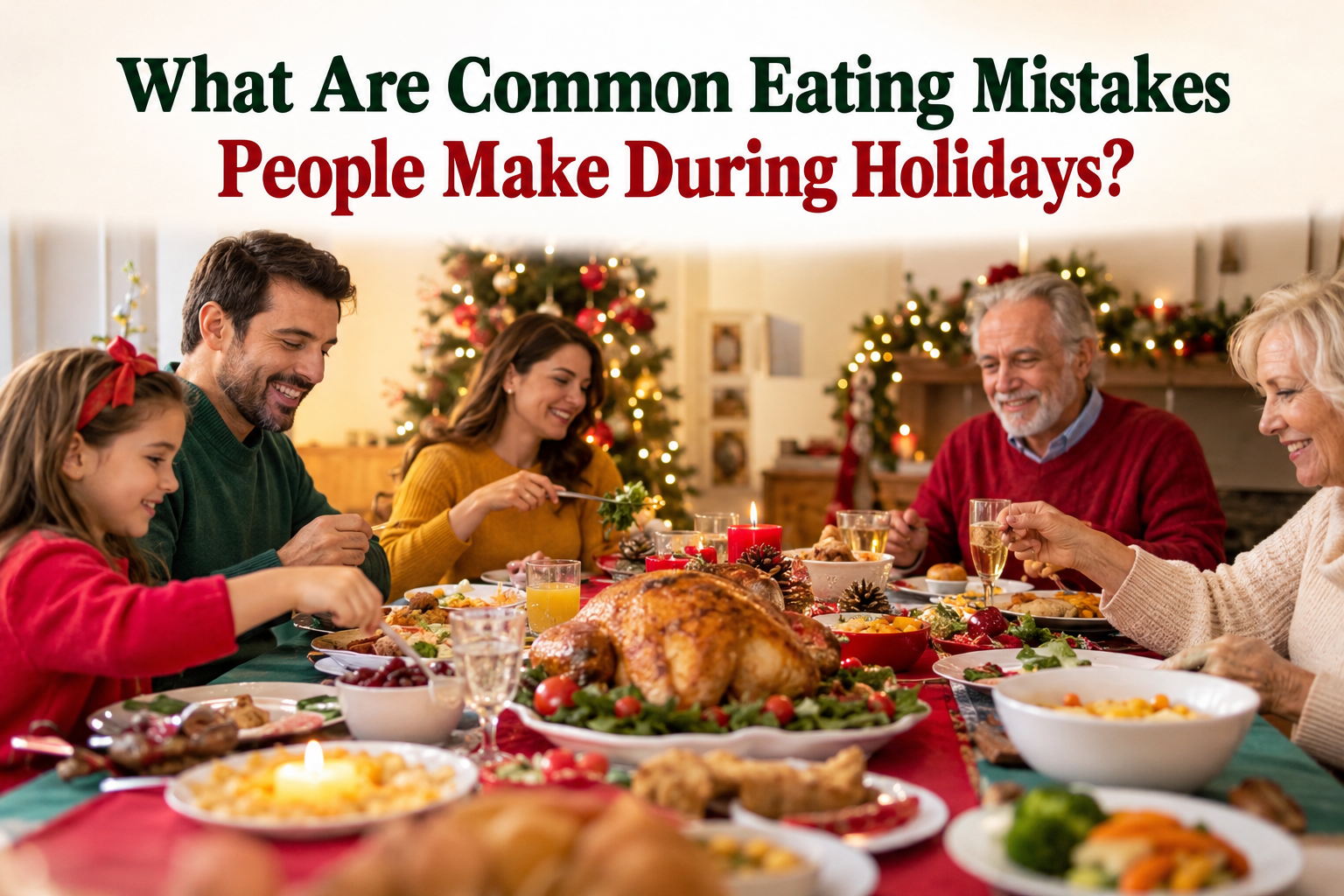
Holidays are a wonderful time to relax, spend time with family, and enjoy delicious food. Whether people are celebrating religious festivals, attending family gatherings, traveling, or enjoying a vacation, food often becomes an important part of the experience. Special meals, homemade desserts, traditional dishes, and favorite snacks make these occasions memorable.
However, holiday celebrations can also change normal eating routines. People may eat larger portions, skip regular meals, consume too many sugary drinks, or forget to drink enough water. These habits may lead to digestive discomfort, tiredness, and unwanted changes in eating patterns.
Understanding common eating mistakes during holidays can help people enjoy their favorite foods while maintaining a balanced diet. Healthy holiday eating does not mean avoiding every dessert or refusing special meals. It simply means making thoughtful choices and recognizing when the body needs food, water, or rest.
In this article, we will explore the most common holiday eating mistakes, why they happen, and how people can develop healthier eating habits without losing the enjoyment of celebrations.
1. Eating Too Much at One Time
One of the most common eating mistakes during holidays is consuming large amounts of food in a single meal.
Holiday tables often contain several dishes, including rice, meat, bread, fried snacks, desserts, and sweet beverages. When many favorite foods are available together, people may feel encouraged to try everything.
Unfortunately, eating beyond comfortable fullness can cause bloating, stomach discomfort, and sluggishness.
A better approach is to begin with a moderate portion and eat slowly. After finishing, allow some time to recognize whether you are still hungry.
You can always take another small serving if needed.
Healthy eating tip: Enjoy your favorite holiday dishes, but pay attention to your hunger and fullness signals.
2. Skipping Breakfast to Save Calories
Many people skip breakfast because they expect to eat a large lunch or dinner during holiday celebrations.
They believe avoiding an earlier meal will help balance their daily calorie intake.
However, skipping breakfast may increase hunger later, making it harder to control portion sizes when food becomes available.
For example, someone who avoids breakfast before a family gathering may arrive extremely hungry and eat more quickly than usual.
A simple breakfast containing protein, fiber, and healthy carbohydrates can help maintain energy throughout the morning.
Good breakfast options include eggs with whole grain bread, oatmeal with fruit, or plain yogurt with nuts.
Eating regularly is often more practical than becoming excessively hungry before a celebration.
3. Eating Too Quickly
Holiday meals are usually enjoyed in busy environments. Family conversations, celebrations, and excitement can distract people from their eating speed.
Some individuals finish their meals within a few minutes without properly noticing the amount they have consumed.
Eating quickly can make it difficult to recognize comfortable fullness because the body needs time to respond to food.
It may also encourage people to take additional servings before realizing they have eaten enough.
Try putting your spoon down occasionally, chewing food properly, and enjoying the taste of each dish.
Eating slowly can make holiday meals more satisfying and may reduce unnecessary overeating.
4. Drinking Too Many Sugary Beverages
Sugary drinks are common during celebrations.
Soft drinks, packaged juices, sweetened tea, flavored milk, and traditional sweet beverages may accompany holiday meals.
Although these drinks can taste refreshing, frequent consumption can add considerable sugar and calories to the daily diet.
One common mistake is focusing on food portions while ignoring the amount of sugar consumed through beverages.
For example, drinking several glasses of sweetened beverages throughout the day may contribute a substantial amount of added sugar.
Water is generally the best option for regular hydration.
People can also enjoy unsweetened tea or water flavored with lemon, cucumber, or fresh mint.
Choosing water more often does not mean completely avoiding a favorite holiday drink. Moderation is what matters.
5. Forgetting to Drink Enough Water
During holidays, people often become busy with shopping, cooking, traveling, and meeting relatives.
As a result, they may forget to drink water regularly.
Warm weather, physical activity, and long travel hours can increase the need for fluids.
Insufficient hydration may contribute to headaches, tiredness, and constipation.
Sometimes, people also confuse thirst with hunger and reach for snacks when they actually need water.
Keeping a water bottle nearby is a simple way to support hydration.
Drink water regularly throughout the day, especially when spending time outdoors.
Remember that individual water needs vary depending on weather conditions, activity level, and overall health.
6. Eating Too Many Fried Foods
Fried foods are popular at holiday gatherings because they are flavorful, convenient, and easy to share.
Common examples include samosas, pakoras, fried chicken, French fries, and other crispy snacks.
Although these foods can be enjoyed occasionally, eating large quantities may increase overall calorie and saturated fat intake, depending on the ingredients and cooking oil.
Heavy fried meals may also cause digestive discomfort for some people.
A balanced approach is to combine fried items with lighter dishes.
For example, serve grilled chicken with vegetables and a small portion of fried snacks.
Baking, grilling, roasting, and steaming can also provide delicious alternatives.
The goal is not to remove traditional foods from celebrations but to create variety.
7. Ignoring Fruits and Vegetables
Holiday meals often focus on rich main dishes, meat, rice, sweets, and snacks.
Fruits and vegetables may receive less attention.
This is a common mistake because these foods provide important vitamins, minerals, fiber, and other beneficial plant compounds.
Fiber supports normal digestion and helps people feel satisfied after meals.
Including vegetables can also improve the nutritional balance of a holiday plate.
Try adding cucumber, tomatoes, carrots, leafy greens, or cooked seasonal vegetables to meals.
Fresh fruit can be served after lunch or offered as a refreshing snack between gatherings.
A colorful plate can make healthy holiday eating both enjoyable and practical.
8. Eating Desserts Without Considering Portions
Desserts are an important part of many celebrations.
Traditional sweets, cakes, pastries, biscuits, chocolates, and ice cream are often shared with family and guests.
The main problem is not enjoying dessert occasionally. It is repeatedly eating large servings without considering the total amount consumed.
For example, someone may eat cake after lunch, sweets during afternoon tea, and another dessert after dinner.
These portions can add up throughout the day.
Instead of avoiding desserts completely, choose the ones you genuinely enjoy.
Take a reasonable serving and eat it slowly.
This approach allows you to appreciate traditional holiday treats without feeling the need to eat every available sweet.
9. Eating Because Food Is Available
During holidays, food may remain visible throughout the day.
Bowls of nuts, biscuits, chocolates, chips, and other snacks are often placed on tables for guests.
People may repeatedly eat small amounts simply because these foods are nearby.
This habit is sometimes called mindless eating.
It can happen while watching television, talking with friends, or using a mobile phone.
Before taking another snack, ask yourself whether you are actually hungry.
If you are hungry, choose something satisfying and enjoy it.
If you are eating because of boredom or habit, consider another activity, such as walking, reading, or spending time with family.
Recognizing the difference between hunger and habit can improve eating awareness.
10. Following an Irregular Meal Schedule
Holidays often change normal daily routines.
People may wake up late, attend gatherings at unusual times, or eat dinner much later than expected.
An occasional change is usually not a major problem. However, frequently missing meals or eating at unpredictable times may leave some people excessively hungry.
This can encourage quick food choices and larger portions.
Try to maintain a reasonably consistent eating routine whenever possible.
If a family dinner is scheduled late, a small nutritious snack during the afternoon may help manage hunger.
Good options include fruit, yogurt, nuts, or whole grain crackers.
Flexible meal planning can support healthy eating habits without interfering with holiday activities.
11. Choosing Convenience Foods Too Often
Traveling and holiday shopping can make home cooking difficult.
People may rely heavily on fast food, packaged snacks, and ready made meals because they are convenient.
Although these foods can fit into a balanced diet, relying on them for most meals may reduce dietary variety and increase intake of sodium, saturated fat, or added sugar.
Planning a few simple meals can make a difference.
Keep easy ingredients available, such as eggs, vegetables, fruits, yogurt, whole grains, and cooked beans.
When eating outside, look for meals that include vegetables and a source of protein.
Small choices can improve overall nutrition even during busy holidays.
12. Feeling Guilty After Eating Special Foods
Another common holiday eating mistake is developing unnecessary guilt after enjoying rich foods.
Some people believe that eating a large meal or dessert means they have completely failed to maintain a healthy diet.
This thinking can lead to restrictive eating, skipped meals, or unhealthy attempts to compensate the following day.
A single celebration meal does not determine overall health.
Long term eating patterns matter much more than one occasional indulgence.
Instead of feeling guilty, return to your usual balanced meals when you feel hungry again.
Food is also connected with family traditions, social relationships, and cultural enjoyment.
A positive relationship with food is an important part of healthy living.
13. Not Paying Attention to Food Safety
Food safety is sometimes overlooked during holidays.
Large meals may be prepared hours before guests arrive, and leftovers may remain on the dining table for extended periods.
Improper food storage can allow harmful bacteria to multiply.
This is especially important for cooked meat, dairy products, rice, seafood, and other perishable foods.
Keep hot foods hot and cold foods properly chilled.
Refrigerate perishable leftovers within two hours, or within one hour when temperatures are above 32°C.
Wash hands before preparing meals and use separate utensils for raw and cooked foods.
Following basic food safety practices helps reduce the risk of foodborne illness during celebrations.
14. Eating While Distracted
Watching television, scrolling through social media, or participating in continuous conversations while eating may reduce awareness of food intake.
People might finish a large plate without fully noticing its taste or how satisfied they feel.
This can make it easier to continue eating after comfortable fullness.
Mindful eating encourages attention to the eating experience.
Notice the appearance, smell, texture, and flavor of your meal.
Take small bites and allow yourself to enjoy the food.
You do not need to remain silent during family meals. Simply check in with your hunger and fullness occasionally.
15. Trying Extreme Diets Before or After Holidays
Some people begin strict diets before holidays because they expect to eat more during celebrations.
Others attempt extreme restrictions immediately afterward.
These approaches may create unnecessary stress and make maintaining healthy eating habits more difficult.
Skipping entire food groups, avoiding meals, or following unrealistic rules is rarely necessary.
A balanced diet should be flexible enough to include everyday meals and occasional celebrations.
Focus on consistency rather than perfection.
Eating nutritious foods regularly, staying active, sleeping adequately, and drinking enough water are more sustainable habits than extreme dieting.
How Can You Maintain Healthy Eating Habits During Holidays?
Avoiding common holiday eating mistakes becomes easier when you make a few practical changes.
Here are some simple ways to enjoy celebrations while supporting your health:
- Eat regular meals instead of arriving extremely hungry at gatherings.
- Begin with moderate portions and take more only when needed.
- Include vegetables, fruits, and fiber rich foods in daily meals.
- Choose water regularly instead of relying on sugary beverages.
- Enjoy traditional desserts without feeling guilty.
- Eat slowly and recognize comfortable fullness.
- Store prepared foods and leftovers safely.
- Maintain a flexible routine that includes sleep and physical activity.
- Avoid strict dieting to compensate for special meals.
- Focus on overall eating patterns rather than individual food choices.
These habits can help you maintain balance while enjoying the social and cultural importance of holiday food.
Frequently Asked Questions
Is overeating during holidays harmful?
Occasional overeating may cause temporary discomfort, bloating, or tiredness. However, repeated overeating can contribute to an unhealthy overall eating pattern. Practicing portion awareness and returning to regular balanced meals can help.
Should people completely avoid sweets during holidays?
No. Most people can enjoy sweets occasionally as part of a balanced diet. Choosing moderate portions and limiting frequent consumption of added sugar is more practical than completely avoiding favorite desserts.
What are the healthiest foods to eat during holidays?
Nutritious holiday options include vegetables, fruits, whole grains, beans, yogurt, nuts, and lean protein sources. Traditional dishes can also be part of healthy meals when portions and preparation methods are considered.
How can people avoid gaining weight during holidays?
Maintaining regular eating habits, paying attention to portions, staying physically active, and limiting frequent sugary drinks may help manage overall energy intake. Weight changes depend on several factors, and short term fluctuations do not always represent changes in body fat.
Is it important to exercise during holidays?
Physical activity supports general health and well being. Walking, playing outdoor games, or enjoying family activities can help people remain active without following a strict exercise schedule.
Conclusion
Holidays should be a time of happiness, relaxation, and meaningful experiences with loved ones. Delicious meals and traditional dishes are an important part of these occasions, and enjoying them should not create unnecessary stress.
However, understanding common eating mistakes during holidays can help people make better food choices. Overeating, skipping meals, consuming excessive sugary drinks, ignoring vegetables, eating too quickly, and forgetting about hydration are habits worth paying attention to.
Healthy holiday eating is not about following strict rules or avoiding enjoyable foods. It is about maintaining balance, recognizing hunger and fullness, and making sensible decisions throughout the day.
By practicing mindful eating, choosing nutritious foods regularly, and allowing flexibility during celebrations, people can enjoy holiday meals while supporting their long term health.
The most important lesson is simple: enjoy your favorite holiday foods, but let balance and moderation guide your everyday eating habits.