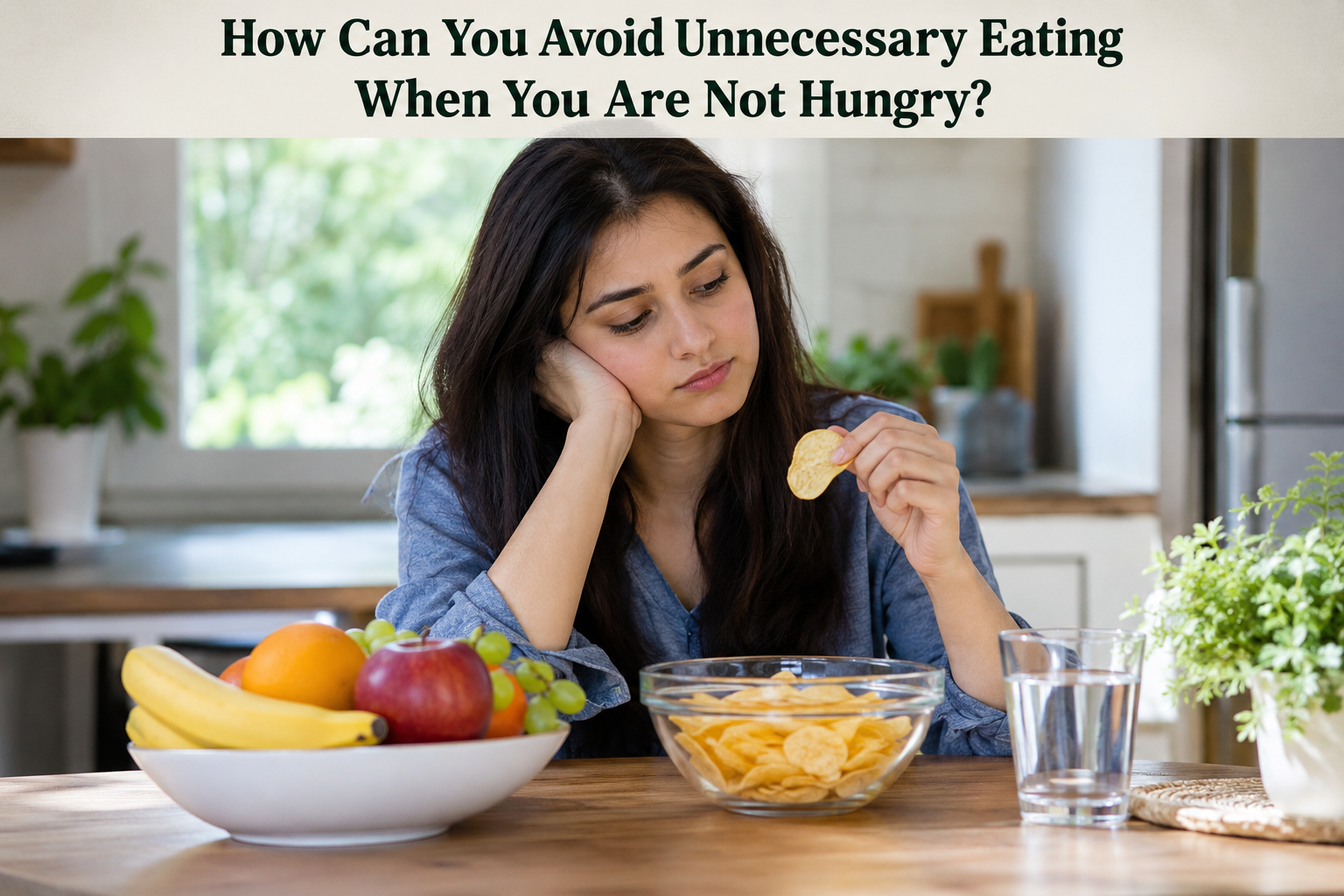
Eating is an important part of everyday life because food provides the energy and nutrients our bodies need to stay healthy. However, many people sometimes eat even when they are not physically hungry. This may happen while watching television, working at a computer, scrolling through social media, or simply feeling bored. Although occasional eating without hunger is normal, regularly consuming more food than your body needs can make it difficult to maintain balanced eating habits.
Learning how to avoid unnecessary eating is not about following strict diets or avoiding your favorite foods. It is about understanding your eating habits, recognizing your body’s hunger signals, and making thoughtful food choices.
When you understand why you eat without feeling hungry, you can develop healthier routines that support your overall well being.
1. Understand Why You Eat When You Are Not Hungry
The first step toward avoiding unnecessary eating is understanding what causes it.
People do not always eat because their bodies need energy. Sometimes, eating becomes a response to emotions, surroundings, or daily habits.
For example, you might reach for biscuits while drinking tea because you are accustomed to having them together. You may also eat snacks while watching a movie without paying attention to how much you consume.
Common reasons for unnecessary eating include boredom, stress, tiredness, food advertisements, social gatherings, and the easy availability of snacks.
Recognizing these situations can help you make more conscious decisions.
Before reaching for food, consider whether you are experiencing physical hunger or simply responding to a familiar habit.
This small moment of awareness can gradually improve your relationship with food.
2. Learn to Recognize Real Hunger Signals
Understanding the difference between physical hunger and the desire to eat is essential for developing healthy eating habits.
Physical hunger usually develops gradually. You may notice an empty feeling in your stomach, reduced energy, or difficulty concentrating. These sensations can indicate that your body needs nourishment.
On the other hand, the desire to eat without hunger may appear suddenly, especially when you see or smell something delicious.
For example, you might feel satisfied after lunch but suddenly want chocolate when someone offers it.
This does not necessarily mean that your body needs additional food.
A useful practice is to ask yourself a simple question before eating:
Am I physically hungry, or do I simply feel like eating something?
You do not need to ignore every craving. However, understanding the reason behind your desire to eat can help you decide what your body actually needs.
3. Avoid Eating Out of Boredom
Boredom is one of the most common reasons people eat when they are not hungry.
When there is nothing interesting to do, food can become a convenient source of entertainment.
You may open the refrigerator several times, search kitchen cupboards for snacks, or eat something simply to pass the time.
One effective way to reduce boredom eating is to find activities that keep your mind engaged.
Reading a book, organizing your room, gardening, walking, or learning a new skill can help redirect your attention.
For example, if you usually eat snacks while sitting at home in the afternoon, try spending that time on a hobby.
The goal is not to keep yourself constantly busy. Instead, it is to recognize when you are looking for stimulation rather than nourishment.
When hunger is not the reason behind eating, another enjoyable activity may satisfy your needs more effectively.
4. Practice Mindful Eating Every Day
Mindful eating means paying attention to your food, your hunger, and your feelings while eating.
Many people consume meals while watching television, using mobile phones, or working. These distractions can make it harder to notice how much food they have eaten.
Practicing mindful eating encourages you to focus on the experience of eating.
Try sitting comfortably at a table and paying attention to the taste, texture, smell, and appearance of your meal.
Chew your food comfortably and allow yourself enough time to enjoy it.
Notice when your hunger begins to decrease and when you feel comfortably satisfied.
You do not need to finish everything on your plate if you are already full. Leftovers can often be stored safely for another meal.
Mindful eating helps you develop greater awareness of your body’s needs without turning meals into a complicated process.
5. Maintain a Regular Meal Schedule
Skipping meals or eating at unpredictable times can sometimes lead to excessive hunger later in the day.
For example, someone who skips breakfast and delays lunch may become extremely hungry by the afternoon.
This can make it more difficult to choose satisfying portions or recognize when enough food has been eaten.
Maintaining a reasonably consistent meal routine can help you manage hunger throughout the day.
Breakfast, lunch, and dinner can provide structure, while planned snacks may be useful when you genuinely feel hungry between meals.
However, everyone has different schedules and nutritional needs.
You do not have to eat at exactly the same minute every day.
The important thing is to develop a flexible routine that provides enough nourishment and prevents long periods of unwanted hunger.

6. Keep Unnecessary Snacks Out of Immediate Reach
Your surroundings can strongly influence your eating behavior.
When snacks are constantly visible, you may feel tempted to eat them even when you are satisfied.
For example, keeping an open packet of chips beside your computer can encourage repeated snacking throughout the day.
A practical solution is to organize your food environment.
Store snacks in cupboards or containers instead of leaving them on tables and desks.
Keep nutritious options such as fresh fruit, yogurt, or nuts available when you need a snack.
You do not need to remove every treat from your home.
Instead, arrange your surroundings so that eating becomes a deliberate choice rather than an automatic reaction.
This simple change can help reduce unnecessary eating during work, study, and leisure activities.
7. Understand the Connection Between Stress and Eating
Stress can influence appetite in different ways.
Some people lose interest in food during stressful situations, while others experience a stronger desire to eat.
When feeling worried, frustrated, or overwhelmed, certain foods may provide temporary comfort.
This behavior is often called emotional eating.
Although enjoying comforting food occasionally is normal, depending on eating as your main way of managing emotions may create unwanted habits.
Try identifying what you are feeling before reaching for a snack.
If you are stressed, consider taking a short walk, practicing gentle breathing, listening to relaxing music, or talking with someone you trust.
These activities may help you manage your emotions without automatically turning to food.
If emotional eating frequently causes distress or feels difficult to control, support from a qualified healthcare professional can be helpful.
8. Drink Water Regularly Throughout the Day
Drinking enough water is important for digestion, temperature regulation, and many other body functions.
Sometimes, people reach for food automatically without first considering whether they are thirsty.
Keeping water nearby can encourage regular hydration and reduce the habit of choosing snacks simply because a drink is needed.
Plain water is a practical choice for everyday hydration.
You can also enjoy water with lemon slices or other unsweetened beverages according to your preferences.
However, water should not be used to suppress genuine hunger or replace meals.
If you feel physically hungry, eating a suitable meal or snack is the appropriate response.
The purpose of staying hydrated is to support health, not to avoid necessary nourishment.
9. Avoid Eating Directly From Large Packages
Eating directly from a large packet or container can make it difficult to notice how much you have consumed.
For example, you may begin eating a few crackers while watching television and continue reaching into the packet without thinking.
Using a small bowl or plate can make eating more intentional.
Place a portion of the food you want to enjoy in the bowl and put the remaining package away.
Sit down and enjoy the snack without unnecessary distractions.
This approach allows you to appreciate your food while remaining aware of the quantity.
You can always have more if you are still hungry.
The objective is not to create strict restrictions but to reduce automatic eating that happens without much attention.
10. Get Enough Sleep Every Night
Sleep plays an important role in regulating appetite and daily energy.
When you do not get enough sleep, changes in appetite related hormones and tiredness may increase your desire for food.
You may also become more interested in highly palatable snacks when you feel exhausted.
Developing healthy sleeping habits can support better eating decisions.
Try following a consistent bedtime, creating a comfortable sleeping environment, and reducing unnecessary screen use before going to bed.
Adults generally need at least seven hours of sleep each night, although individual requirements vary.
Getting sufficient rest can improve concentration, mood, and your ability to recognize hunger signals.
A healthy eating routine works best when it is supported by other healthy lifestyle habits.
11. Reduce Distractions During Meals
Eating while distracted is a common habit in modern life.
Many people consume food while scrolling through their phones, watching videos, or answering work messages.
These activities can divide your attention and make it harder to recognize satisfaction.
Try setting aside a short period specifically for eating.
Keep your mobile phone away, turn off unnecessary screens, and focus on enjoying your meal.
You may find that food feels more satisfying when you give it your full attention.
This habit can also help you notice whether you are eating because of hunger or because food is simply available.
Even one distraction free meal each day can be a useful starting point.
12. Choose Balanced and Satisfying Meals
Eating balanced meals can help you feel comfortably satisfied and reduce the likelihood of frequent hunger between meals.
A balanced meal generally includes a combination of protein, fiber rich carbohydrates, vegetables or fruit, and healthy fats.
For example, a meal containing whole wheat roti, lentils, vegetables, and yogurt provides several important nutrients.
Protein and fiber can contribute to feelings of fullness, while carbohydrates provide energy for daily activities.
Healthy fats also support normal body functions and can make meals more satisfying.
Try including a variety of nutritious foods instead of relying mainly on refined snacks or sugary drinks.
Remember that no single food can prevent unnecessary eating.
Your overall eating pattern matters more than any individual ingredient.
13. Recognize Eating Habits Connected to Daily Activities
Sometimes, people develop strong connections between certain activities and eating.
For example, you may automatically want popcorn whenever you watch a movie or biscuits whenever you prepare tea.
These habits can continue even when you are not hungry.
Pay attention to situations that regularly encourage unnecessary snacking.
Once you identify them, experiment with changing your routine.
You might enjoy tea without automatically adding biscuits, or watch a film without keeping snacks beside you.
If you genuinely want something to eat, you can still choose to enjoy it.
The important difference is making that choice consciously rather than following a habit without thinking.
14. Do Not Follow Overly Strict Food Rules
Avoiding unnecessary eating should never mean ignoring hunger or creating fear around food.
Extremely strict rules can make eating stressful and may increase cravings for restricted foods.
For example, completely banning your favorite dessert may make you think about it more frequently.
A more balanced approach allows room for both nutritious everyday meals and occasional treats.
You can enjoy a small piece of cake at a celebration even when you are not physically hungry.
Food is also part of culture, enjoyment, and social connection.
The goal is to reduce frequent, unintentional eating, not to eliminate every eating experience that happens without hunger.
Flexibility is an important part of building sustainable healthy eating habits.
15. Develop Better Awareness of Your Daily Eating Patterns
One of the most useful ways to avoid unnecessary eating is to observe your habits over time.
Notice when you tend to snack, what you are doing, and how you feel before eating.
You may discover that you eat more frequently when working late, feeling bored, or spending long periods in front of a screen.
A simple food and mood journal can help you understand these patterns.
You do not need to count every calorie or record every bite.
Instead, write down a few observations about your hunger, emotions, and eating environment.
For example, you might notice that afternoon snacking usually happens when you feel tired rather than hungry.
Once you recognize this pattern, you can consider whether a short rest, movement break, or more satisfying lunch would help.
Small changes based on personal awareness are often easier to maintain than complicated food rules.
Frequently Asked Questions
Why do I want to eat even when I am not hungry?
You may want to eat because of boredom, stress, tiredness, habit, food advertisements, or the availability of enjoyable snacks. Eating is influenced by emotions and surroundings as well as physical hunger.
How can I stop eating out of boredom?
Start by identifying situations when boredom encourages you to snack. Try replacing automatic eating with enjoyable activities such as reading, walking, gardening, or spending time with family. Eat when you recognize genuine hunger.
Is it unhealthy to eat when you are not hungry?
Not necessarily. Eating for pleasure, celebrations, and social occasions is a normal part of life. However, frequent unintentional eating may interfere with comfortable fullness and balanced eating patterns.
Can drinking water help reduce unnecessary snacking?
Drinking water can help you stay hydrated and recognize when thirst is the reason you are reaching for something. However, it should never replace food when your body needs nourishment.
What is the best way to control unnecessary eating naturally?
Focus on recognizing hunger signals, eating balanced meals, sleeping sufficiently, reducing distractions, managing stress, and creating a supportive food environment. Consistent habits are generally more sustainable than strict restrictions.
Conclusion
Learning how to avoid unnecessary eating when you are not hungry begins with understanding your body and your daily habits. Hunger is not the only reason people eat. Emotions, boredom, stress, routines, and surroundings can all influence food choices.
By practicing mindful eating, maintaining regular meals, choosing satisfying foods, getting enough sleep, and recognizing emotional triggers, you can gradually develop a healthier relationship with eating.
Remember that healthy eating does not require perfection. It is normal to enjoy food for pleasure and during special occasions.
The real goal is to make eating a conscious and balanced part of your lifestyle rather than an automatic response to every craving, emotion, or distraction. Small, consistent improvements can help you build sustainable eating habits that support your long term health and well being.