
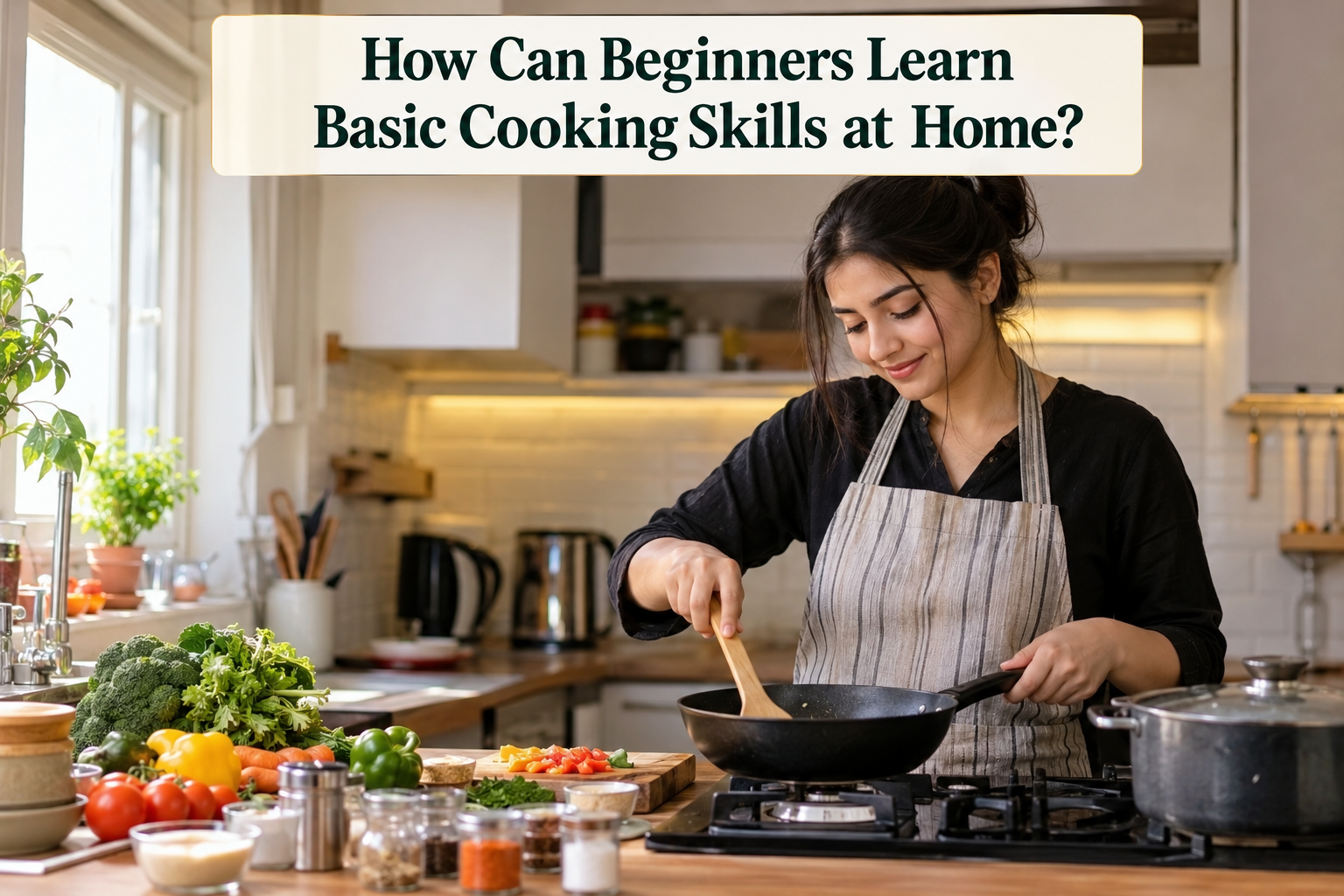
Learning how to cook is an important life skill that can make everyday living easier, healthier, and more enjoyable. Many people depend on restaurants, packaged meals, or family members because they do not know how to prepare food themselves. However, cooking is not as difficult as it may seem. With a little patience, regular practice, and basic knowledge, anyone can learn to prepare simple and delicious meals at home.
For beginners, the kitchen may feel confusing at first. There are different utensils, ingredients, cooking methods, and recipes to understand. Some people worry about burning food, adding the wrong amount of spices, or making mistakes during preparation. These concerns are normal when learning something new.
The best way to learn basic cooking skills at home is to start with simple recipes, understand essential techniques, and practice regularly. Cooking becomes easier when beginners focus on learning one skill at a time instead of trying to prepare complicated meals.
This article explains practical ways beginners can develop cooking skills, gain confidence in the kitchen, and prepare homemade meals without unnecessary difficulty.
1. Start With Simple and Easy Recipes
One of the most effective ways to learn cooking is to begin with recipes that require only a few ingredients and simple preparation methods.
Beginners should avoid complicated dishes that involve several cooking stages. Starting with easy meals helps people understand how ingredients behave during cooking.
Some suitable recipes for beginners include boiled eggs, vegetable omelets, rice, sandwiches, simple soups, and cooked vegetables.
For example, preparing an omelet teaches several useful skills. A beginner learns how to crack eggs, mix ingredients, control heat, and recognize when food is properly cooked.
Similarly, cooking plain rice helps beginners understand the relationship between water, temperature, and cooking time.
Once these basic dishes become familiar, beginners can gradually try recipes that require more ingredients and preparation steps.
The goal is not to prepare perfect meals immediately. It is to build confidence through small achievements.
2. Understand Basic Kitchen Tools and Their Uses
Before learning different cooking techniques, beginners should become familiar with common kitchen tools.
Every kitchen contains utensils designed for specific purposes. Understanding how to use them correctly makes food preparation easier and safer.
Some essential kitchen tools include:
- Kitchen knife: Used for cutting vegetables, fruits, and other ingredients.
- Cutting board: Provides a stable surface for chopping food.
- Frying pan: Suitable for preparing eggs, vegetables, and other quick meals.
- Cooking pot: Used for boiling rice, preparing soups, and cooking larger portions.
- Measuring cups and spoons: Help beginners follow recipes accurately.
- Spatula: Useful for stirring, turning, and serving food.
- Colander: Helps drain water from pasta and washed vegetables.
- Food thermometer: Checks whether meat and other foods have reached safe cooking temperatures.
Beginners do not need expensive equipment to learn cooking at home.
A few reliable utensils are enough to prepare many everyday meals. As cooking experience improves, additional tools can be purchased according to individual needs.
3. Learn How to Prepare Ingredients Properly
Food preparation is an essential part of cooking. Many recipes become easier when ingredients are prepared before the actual cooking begins.
This process includes washing vegetables, measuring spices, peeling ingredients, and cutting food into suitable pieces.
For example, when preparing vegetable rice, beginners should wash and cut the vegetables before heating the cooking pot.
Keeping ingredients ready helps prevent confusion during cooking.
Learning proper cutting techniques is also important. Vegetables cut into similar sizes generally cook more evenly.
Beginners should use a sharp knife carefully, keep the cutting board stable, and practice cutting slowly.
Fresh produce should be washed under running water before preparation. Raw meat should be handled separately to prevent contamination.
Good preparation habits save time and make the cooking process more organized.
4. Understand Different Cooking Methods
Learning basic cooking methods helps beginners prepare a wider variety of foods.
Each cooking method uses heat differently, which affects the taste, texture, and appearance of ingredients.
Boiling
Boiling involves cooking food in hot water.
It is commonly used for rice, pasta, potatoes, eggs, and vegetables.
Beginners should learn how to adjust cooking times because different foods require different amounts of heat and moisture.
Steaming
Steaming uses hot steam to cook food without placing it directly in water.
This method is suitable for vegetables, fish, and certain traditional dishes.
Steaming can help preserve the natural texture and flavor of ingredients when cooking times are controlled.
Frying
Frying involves cooking food in heated oil or another suitable fat.
Beginners can practice shallow frying with simple dishes such as eggs or vegetables.
Temperature control is important because excessive heat can burn the outside of food before the inside cooks properly.
Baking
Baking uses dry heat inside an oven.
Bread, cakes, potatoes, and several other dishes can be prepared through baking.
Beginners should follow recommended oven temperatures and cooking times until they gain experience.
Understanding these methods provides a useful foundation for everyday home cooking.
5. Learn How to Control Cooking Temperature
Temperature control is one of the most important basic cooking skills.
Different foods require different levels of heat. Using the wrong temperature can affect flavor, texture, and cooking results.
High heat may be useful for quickly browning certain ingredients, while low heat is better for gentle cooking.
For example, scrambled eggs usually turn out softer when cooked over low or medium heat.
Cooking vegetables over excessive heat may cause them to burn before becoming tender.
Beginners should observe how food changes during cooking.
If ingredients begin browning too quickly, reducing the temperature can help prevent burning.
It is also important to remember that cooking equipment behaves differently. Gas stoves, electric cookers, and induction stoves may respond differently to temperature adjustments.
With regular practice, beginners gradually become more comfortable controlling heat.

6. Practice Measuring Ingredients Correctly
Accurate ingredient measurement helps beginners achieve more consistent cooking results.
Many new cooks struggle because they add ingredients without understanding the required quantities.
Too much salt can make food unpleasant, while excessive water may change the texture of rice or soup.
Following recipe measurements is especially useful during the early learning stages.
Measuring cups and spoons help beginners understand ingredient proportions.
For example, when preparing rice, the amount of water needed depends on the rice variety, cooking method, and whether the rice has been soaked.
Following a reliable recipe is better than guessing.
As beginners gain experience, they can gradually adjust ingredient quantities according to personal preferences.
7. Learn Basic Seasoning and Flavor Balance
Seasoning makes food more enjoyable by improving its natural taste.
Salt, black pepper, garlic, ginger, lemon juice, and common herbs are useful ingredients for learning basic flavor combinations.
Beginners should start with small quantities of seasonings.
Adding too many spices at once can make it difficult to understand which ingredient is responsible for a particular flavor.
For example, a simple vegetable soup can be prepared using onions, garlic, vegetables, salt, and black pepper.
After tasting the soup, beginners can decide whether additional seasoning is needed.
Some dishes benefit from a little acidity, such as lemon juice, while others gain flavor from herbs or gently cooked onions.
Learning to taste and adjust food carefully is an important step toward becoming a confident home cook.
8. Follow Recipes Carefully Before Experimenting
Recipes provide helpful instructions for people who are learning basic cooking skills.
A good recipe explains which ingredients are needed, how they should be prepared, and the order in which cooking steps should be completed.
Beginners should read the entire recipe before starting.
This helps them understand the required tools, ingredients, cooking temperatures, and estimated preparation time.
It is also useful to check whether any ingredients require advance preparation.
For example, some beans need soaking before cooking, while certain dough recipes require resting time.
Following instructions carefully reduces unnecessary mistakes.
After successfully preparing a recipe several times, beginners can begin experimenting with different vegetables, herbs, or spices.
Small changes make it easier to understand how ingredients affect the final dish.
9. Develop Good Kitchen Safety Habits
Kitchen safety should always be a priority when learning to cook.
Cooking involves sharp tools, hot surfaces, electrical equipment, and ingredients that require careful handling.
Beginners should develop safe habits from the beginning.
Hands should be washed with soap and water before food preparation and after touching raw meat, poultry, or eggs.
Separate cutting boards or properly cleaned surfaces should be used for raw meat and ready to eat foods.
Raw poultry should not be washed because splashing water can spread harmful bacteria around the kitchen.
Cooking utensils should be placed away from the edges of counters, and pot handles should be turned inward when practical.
Food should also be cooked to safe internal temperatures. For example, poultry should reach 74°C or 165°F.
A food thermometer is more reliable than judging whether meat is cooked by its color alone.
These habits help beginners prepare meals safely while developing confidence.
10. Keep the Cooking Area Clean and Organized
A clean kitchen creates a more comfortable cooking environment.
Beginners may find cooking stressful when ingredients, utensils, and dirty dishes are scattered across the counter.
Keeping everything organized makes preparation more manageable.
Before cooking, clear unnecessary objects from the workspace and arrange the required ingredients.
During cooking, wash used utensils when convenient and place waste in a suitable container.
After preparing food, clean kitchen surfaces and store leftover ingredients properly.
Perishable cooked food should generally be refrigerated within two hours, or within one hour when the surrounding temperature is above 32°C or 90°F.
Maintaining cleanliness helps prevent contamination and makes future cooking sessions easier.
11. Learn Simple Meal Planning
Meal planning is another useful skill for beginners.
Instead of deciding what to cook at the last moment, people can prepare a simple plan for several days.
This makes grocery shopping easier and reduces unnecessary food purchases.
For example, a beginner might plan boiled eggs and toast for breakfast, vegetable rice for lunch, and chicken soup for dinner.
The following day could include an omelet, lentils with rice, and a simple vegetable dish.
Choosing recipes with some shared ingredients can also reduce food waste.
Meal planning does not need to be complicated. Even planning two or three meals in advance can make home cooking more manageable.
12. Practice Cooking Skills Regularly
Regular practice is essential for learning any practical skill, including cooking.
Watching cooking videos and reading recipes can provide knowledge, but actual experience helps beginners understand how food behaves.
Cooking the same simple dish several times is an effective way to improve.
For example, preparing an omelet repeatedly helps beginners recognize the correct temperature, cooking time, and ingredient proportions.
Small mistakes provide useful learning opportunities.
If rice becomes too soft, the beginner can review the water quantity or cooking time.
If vegetables become too dry, the amount of liquid or cooking temperature may need adjustment.
Keeping a small cooking notebook can also help. Beginners can record successful recipes, measurements, and improvements for future reference.
Progress may be gradual, but consistent practice develops practical knowledge.
13. Learn From Cookbooks and Reliable Cooking Resources
Beginners can improve their cooking knowledge by using cookbooks, educational videos, and trusted cooking websites.
Cookbooks are particularly useful because they often explain recipes in a clear sequence.
Some beginner cookbooks also describe cooking terms, preparation methods, and common kitchen mistakes.
Cooking videos can demonstrate skills that are difficult to understand through written instructions alone.
For example, watching someone chop onions or knead dough may make these techniques easier to learn.
However, beginners should select reliable resources that provide clear measurements, realistic cooking instructions, and appropriate food safety guidance.
Combining reading with hands-on practice can help develop a stronger understanding of cooking.
14. Build Confidence Through Small Cooking Goals
Learning basic cooking skills becomes more enjoyable when beginners set realistic goals.
Trying to master several complicated dishes immediately can lead to frustration.
A better approach is to focus on one improvement at a time.
During the first week, beginners might practice boiling eggs, preparing sandwiches, and cooking rice.
The following week, they could learn how to prepare vegetable dishes, soups, or simple lentils.
Later, they can explore more advanced techniques such as baking, roasting, or preparing complete family meals.
Celebrating small achievements helps maintain motivation.
Cooking confidence develops naturally when people recognize their progress and become comfortable using kitchen tools and ingredients.
15. Learn How to Fix Common Cooking Mistakes
Making mistakes is a normal part of learning to cook.
Even experienced cooks occasionally prepare food that does not turn out as expected.
Beginners should learn to identify problems and understand possible solutions.
If soup becomes too thick, adding a suitable amount of water or broth may improve its consistency.
If food tastes bland, small seasoning adjustments can help improve the flavor.
If vegetables are undercooked, additional cooking time may be necessary.
However, burnt food cannot always be repaired, and spoiled or improperly handled food should never be considered safe simply because it is cooked again.
The important lesson is to understand why something went wrong.
Learning from mistakes helps beginners become more independent and confident in the kitchen.
Conclusion
Learning basic cooking skills at home is a practical and rewarding experience. Beginners do not need professional training, expensive equipment, or advanced knowledge to prepare homemade meals.
Starting with simple recipes, understanding kitchen tools, practicing cooking techniques, and following proper food safety habits provide a strong foundation.
Regular practice also helps people improve their timing, temperature control, ingredient preparation, and seasoning skills.
Cooking becomes easier when beginners remain patient and focus on gradual improvement rather than perfection.
Over time, simple activities such as boiling rice, chopping vegetables, preparing eggs, and making soup can develop into the ability to prepare a wide variety of meals.
The most effective way to learn cooking at home is to practice consistently, understand basic techniques, and gain experience through everyday food preparation.
With determination and a willingness to learn, anyone can develop useful cooking skills that support healthier eating habits, reduce dependence on prepared meals, and make everyday life more convenient.


