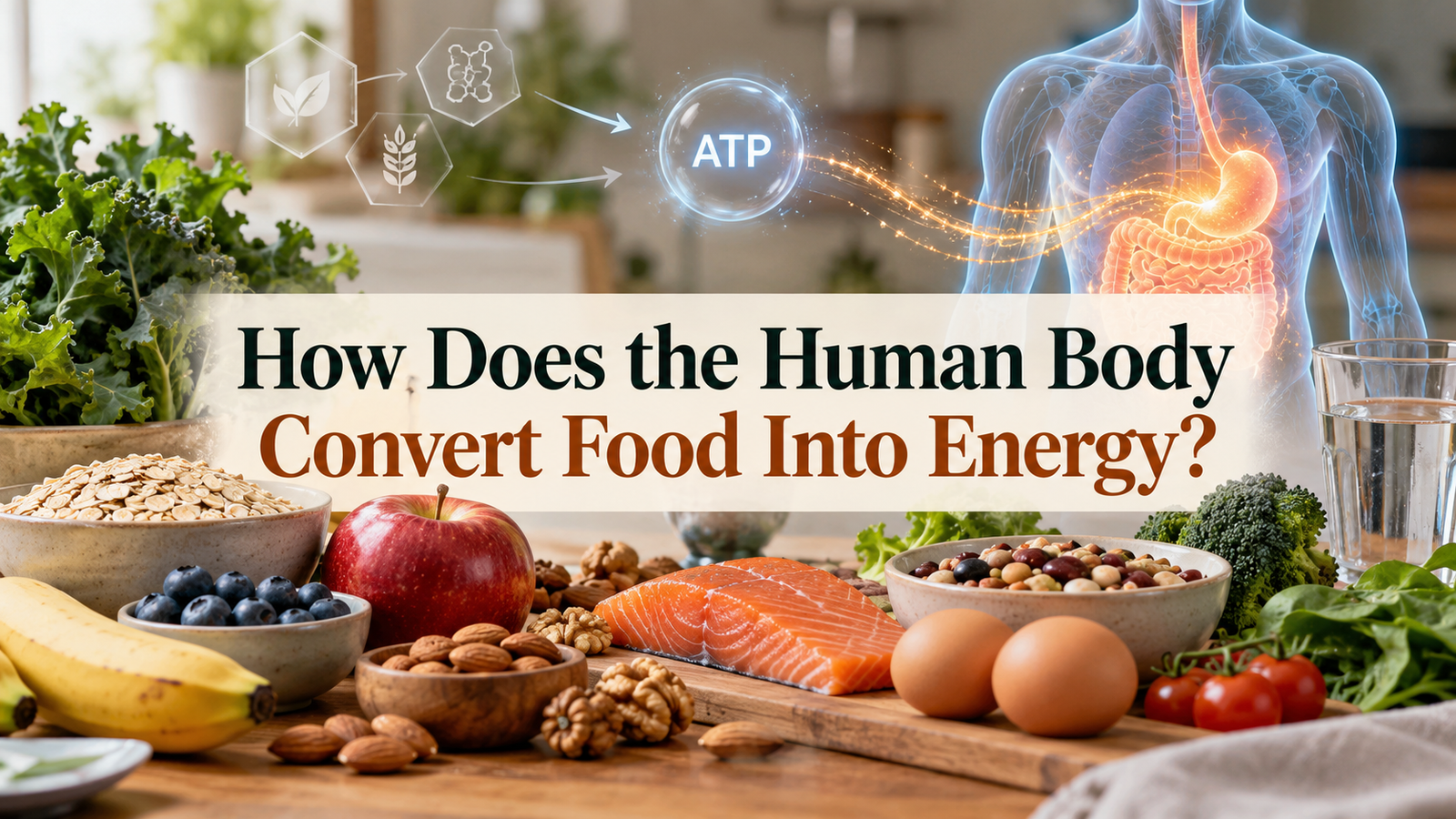
Food is one of the most important sources of energy for the human body. Every movement, heartbeat, breath, and thought requires energy. Even when a person is sleeping, the body continues performing essential activities that keep organs functioning properly. This energy comes mainly from the food we eat every day.
The process of converting food into energy involves several organs, digestive enzymes, nutrients, and chemical reactions. The digestive system breaks food into smaller substances, while cells use these nutrients to produce energy that supports normal body functions.
Understanding how the human body converts food into energy can help people make better dietary choices and develop healthier eating habits. It also explains why different foods affect energy levels differently and why balanced nutrition is important for maintaining an active lifestyle.
What Does Converting Food Into Energy Mean?
Converting food into energy means transforming the nutrients present in food into a form that body cells can use.
Food contains carbohydrates, proteins, and fats. These nutrients provide energy, although the body processes them differently. After digestion, nutrients enter the bloodstream and travel to different tissues and organs.
Inside cells, chemical reactions release usable energy from these nutrients. Much of this energy is captured in a molecule called adenosine triphosphate, commonly known as ATP.
ATP acts as the main energy carrier in living cells. It supplies energy for muscle contractions, nerve communication, tissue repair, and many other biological activities.
The entire process involves digestion, absorption, metabolism, and cellular energy production.
How Does Digestion Begin the Energy Conversion Process?
The journey of food into energy begins in the digestive system.
When someone eats a meal, the body starts breaking down food into smaller components that can eventually be absorbed and used.
Digestion begins in the mouth, where teeth break food into smaller pieces. Saliva contains an enzyme called amylase that starts breaking down starch into simpler carbohydrates.
After swallowing, food passes through the esophagus and enters the stomach.
The stomach mixes food with digestive juices and acid. These substances help break down food, particularly proteins, into smaller components.
Food then moves into the small intestine, where most nutrient digestion and absorption take place.
The pancreas releases digestive enzymes that help break down carbohydrates, proteins, and fats. The liver produces bile, which helps the body digest and absorb fats.
Once nutrients become small enough, they pass through the intestinal lining and enter the blood or lymphatic system.
This allows the body to transport nutrients to the cells where they are needed.
How Do Carbohydrates Provide Energy?
Carbohydrates are an important energy source for the human body.
They are commonly found in rice, bread, potatoes, oats, fruits, vegetables, and other everyday foods.
During digestion, most digestible carbohydrates are broken down into simple sugars, including glucose.
Glucose enters the bloodstream and becomes available to body cells.
The pancreas releases insulin, a hormone that helps regulate blood glucose levels and supports glucose uptake by muscle and fat cells.
Once glucose enters cells, it can be used to produce ATP.
Carbohydrates are particularly important during physical activities because the body can use glucose relatively quickly.
The brain also depends heavily on glucose under normal dietary conditions, although it can use other fuels, such as ketones, during prolonged fasting.
What Happens to Extra Glucose?
The body does not always use all available glucose immediately.
Some glucose is stored as glycogen in the liver and muscles.
Liver glycogen helps maintain blood glucose levels between meals, while muscle glycogen provides fuel during physical activity.
When glycogen stores are sufficient and energy intake remains higher than energy needs, the body can convert some excess energy into fat for longer term storage.
This storage system helps ensure that energy remains available when food is not immediately accessible.
How Does the Body Convert Fats Into Energy?
Fats are another major energy source.
They are present in foods such as nuts, seeds, cooking oils, dairy products, fish, and meat.
Dietary fats contain more energy per gram than carbohydrates or proteins.
One gram of fat provides approximately nine calories, while one gram of carbohydrate provides approximately four calories.
During digestion, fats are broken down mainly into fatty acids and monoglycerides.
These substances are absorbed through the intestinal lining and processed before entering circulation.
When the body needs energy, fatty acids can be transported into cells and broken down through a process called beta oxidation.
This process produces molecules that enter additional chemical pathways to generate ATP.
Fat is especially important as an energy source during rest and many forms of prolonged, moderate intensity activity.
Stored body fat also serves as an energy reserve when food intake is insufficient to meet immediate energy needs.
However, dietary fat remains essential even when someone wants to manage body weight because it supports cell membranes, hormone production, and the absorption of certain vitamins.
How Do Proteins Contribute to Energy Production?
Proteins are mainly known for their role in building and repairing body tissues.
They are found in eggs, meat, fish, milk, yogurt, beans, lentils, and other foods.
During digestion, proteins are broken down into amino acids.
The body uses these amino acids to build muscles, produce enzymes, support immune function, and maintain healthy tissues.
Although protein can provide energy, it is not usually the body’s preferred immediate fuel.
When necessary, the body can convert certain amino acids into compounds that enter energy producing pathways.
Some amino acids can also contribute to glucose production through a process called gluconeogenesis.
Protein provides approximately four calories per gram.
Eating adequate protein helps maintain muscle mass and supports normal body functions, particularly when combined with balanced nutrition and regular physical activity.
What Role Do Cells Play in Producing Energy?
Digestion makes nutrients available, but much of the actual production of usable energy happens inside body cells.
Cells contain specialized structures called mitochondria.
Mitochondria are often described as the powerhouses of cells because they produce much of the ATP needed for cellular activities.
They use energy derived from nutrients through a series of chemical reactions.
These reactions involve oxygen during aerobic energy production.
The amount of energy produced depends on the available nutrients, oxygen supply, and the metabolic needs of the cell.
Different tissues also have different energy requirements.
For example, heart muscle cells require a continuous energy supply because the heart contracts throughout life.
Similarly, brain cells need a reliable supply of energy to support communication between nerve cells.
What Is Cellular Respiration?
Cellular respiration is the process through which cells extract usable energy from nutrients.
It is one of the most important biological processes involved in converting food into energy.
When glucose is used as fuel, cellular respiration includes several major stages.

1. Glycolysis
Glycolysis occurs in the fluid portion of the cell called the cytoplasm.
During this process, one glucose molecule is broken down into two molecules of pyruvate.
A small amount of ATP is produced, along with molecules that carry high energy electrons.
Glycolysis does not directly require oxygen, making it useful even when oxygen availability is limited.
2. Citric Acid Cycle
When oxygen is available, pyruvate can enter mitochondria and be converted into acetyl CoA.
Acetyl CoA then enters the citric acid cycle, also called the Krebs cycle.
This cycle produces carbon dioxide and transfers energy to specialized electron carriers.
Only a small amount of ATP is produced directly at this stage.
Most of the captured energy is carried forward to the next process.
3. Electron Transport Chain
The electron transport chain operates in the inner mitochondrial membrane.
It uses electrons carried from earlier reactions to help create a gradient that drives ATP production.
Oxygen acts as the final electron acceptor and helps form water.
This stage produces most of the ATP generated during aerobic glucose metabolism.
Together, these reactions allow cells to use the chemical energy stored in food to power essential activities.
Why Is Oxygen Important for Energy Production?
Oxygen plays a major role in the efficient production of ATP.
When a person breathes, oxygen enters the lungs and passes into the bloodstream.
Red blood cells transport oxygen to tissues throughout the body.
Inside cells, oxygen supports aerobic respiration, allowing the body to extract substantial amounts of energy from nutrients.
When oxygen availability becomes limited, cells can still produce some ATP through glycolysis.
During intense exercise, working muscles may produce lactate as part of their response to high energy demands.
This allows glycolysis to continue providing energy rapidly.
However, aerobic metabolism is generally more efficient at extracting energy from glucose.
This explains why both breathing and blood circulation are essential for maintaining normal cellular energy production.
How Does Metabolism Control Energy Use?
Metabolism refers to all the chemical reactions that occur inside the body to maintain life.
These reactions include converting food into energy, building tissues, breaking down substances, and supporting normal cellular functions.
Metabolism has two major components.
Catabolism involves breaking larger molecules into smaller ones and releasing energy.
Anabolism involves using energy to build and repair important body structures.
Both processes work together continuously.
The body also uses energy while resting. This resting energy expenditure supports breathing, circulation, body temperature regulation, and organ function.
Age, body size, muscle mass, hormones, physical activity, and certain health conditions can influence overall energy requirements.
A person with greater muscle mass may have a higher resting energy expenditure than someone with less muscle mass, although many factors contribute to the difference.
How Do Vitamins and Minerals Help Produce Energy?
Vitamins and minerals do not provide calories directly.
However, several of them are essential for the chemical reactions that release energy from food.
B vitamins are particularly important because many act as parts of coenzymes involved in metabolism.
For example, vitamin B1 helps enzymes involved in carbohydrate metabolism.
Vitamin B2 and vitamin B3 contribute to reactions that transfer electrons during energy production.
Vitamin B6 supports amino acid metabolism, while vitamin B12 helps maintain healthy nerve function and red blood cell production.
Iron is also important because it supports oxygen transport through hemoglobin and participates in cellular energy processes.
Magnesium contributes to numerous enzyme reactions, including those involving ATP.
A varied diet containing vegetables, fruits, whole grains, dairy products, legumes, nuts, and appropriate protein sources can help provide these nutrients.
Taking extra vitamins does not automatically increase energy in people who already receive adequate amounts.
Why Do Some Foods Provide Longer Lasting Energy?
Different foods affect digestion and energy availability in different ways.
Foods containing refined carbohydrates may be digested and absorbed relatively quickly, particularly when they contain little fiber, fat, or protein.
Whole grains, beans, lentils, and many vegetables contain fiber, which can slow digestion and influence glucose absorption.
Meals combining carbohydrates, protein, healthy fats, and fiber often provide greater satisfaction and a steadier release of nutrients.
For example, eating oatmeal with plain yogurt and nuts provides a mixture of carbohydrates, protein, and fats.
Similarly, rice served with lentils and vegetables offers several nutrients that support normal metabolism.
However, food does not produce a fixed amount of energy over a particular number of hours.
Energy availability depends on portion size, food composition, physical activity, and individual metabolic needs.
What Happens When the Body Does Not Receive Enough Food?
When food intake becomes insufficient, the body relies more heavily on stored energy.
Initially, the liver helps maintain blood glucose by breaking down glycogen.
As fasting continues, the body increases its use of stored fat.
The liver can also produce ketones, which provide an alternative fuel for certain tissues, including the brain.
The body may break down some protein to provide amino acids for essential metabolic functions and glucose production.
Long periods of inadequate nutrition can lead to muscle loss, fatigue, nutrient deficiencies, and reduced physical performance.
Therefore, maintaining sufficient food intake and nutritional balance is important for everyday health.
How Can Healthy Eating Support Better Energy Levels?
Healthy eating supports the body’s natural ability to convert food into usable energy.
A balanced diet should contain appropriate amounts of carbohydrates, proteins, fats, vitamins, and minerals.
Whole grains, fruits, vegetables, legumes, and other fiber rich foods contribute important nutrients.
Protein sources such as eggs, fish, chicken, milk, beans, and lentils support tissue maintenance and repair.
Healthy fat sources, including nuts, seeds, and suitable vegetable oils, provide essential fatty acids and concentrated energy.
Drinking enough water is also important because water supports digestion, nutrient transport, blood circulation, and temperature regulation.
Regular physical activity helps improve metabolic health and the body’s ability to use different fuels.
Adequate sleep supports hormonal regulation, appetite control, and normal energy balance.
Together, these habits help the body function efficiently throughout the day.
Frequently Asked Questions
How long does it take for food to turn into energy?
The body begins processing food soon after eating. Some nutrients become available within hours, but digestion and absorption take different amounts of time depending on the meal. Energy production itself happens continuously inside cells.
Which nutrient provides the most calories?
Fat provides approximately nine calories per gram, making it more energy dense than carbohydrates and protein, which each provide approximately four calories per gram.
Does the body produce energy while sleeping?
Yes. During sleep, the body continues producing ATP to support breathing, heartbeat, brain activity, temperature regulation, and tissue maintenance.
Can the body produce energy without carbohydrates?
Yes. The body can use fats and proteins for energy. It can also produce glucose from certain noncarbohydrate substances and generate ketones from fats during prolonged fasting or carbohydrate restriction.
Why do people sometimes feel tired after eating?
A large meal may temporarily increase feelings of sleepiness due to digestive activity, hormonal responses, circadian rhythms, and meal composition. Persistent fatigue may have other causes that require medical evaluation.
Conclusion
Understanding how the human body converts food into energy reveals how closely digestion, metabolism, and cellular activity work together.
Food is broken down into nutrients that enter the bloodstream and reach body cells. Carbohydrates, fats, and proteins provide chemical energy, while mitochondria help convert much of that energy into ATP through cellular respiration.
Oxygen, vitamins, minerals, enzymes, and hormones all contribute to these processes.
The body continuously adjusts how it uses and stores nutrients according to its energy requirements. This allows people to perform daily activities, maintain organ function, and remain active even between meals.
A balanced diet, sufficient hydration, regular exercise, and adequate sleep support these natural processes.
By understanding the connection between food and energy production, people can make more informed dietary decisions and develop habits that support long term health and well being.