

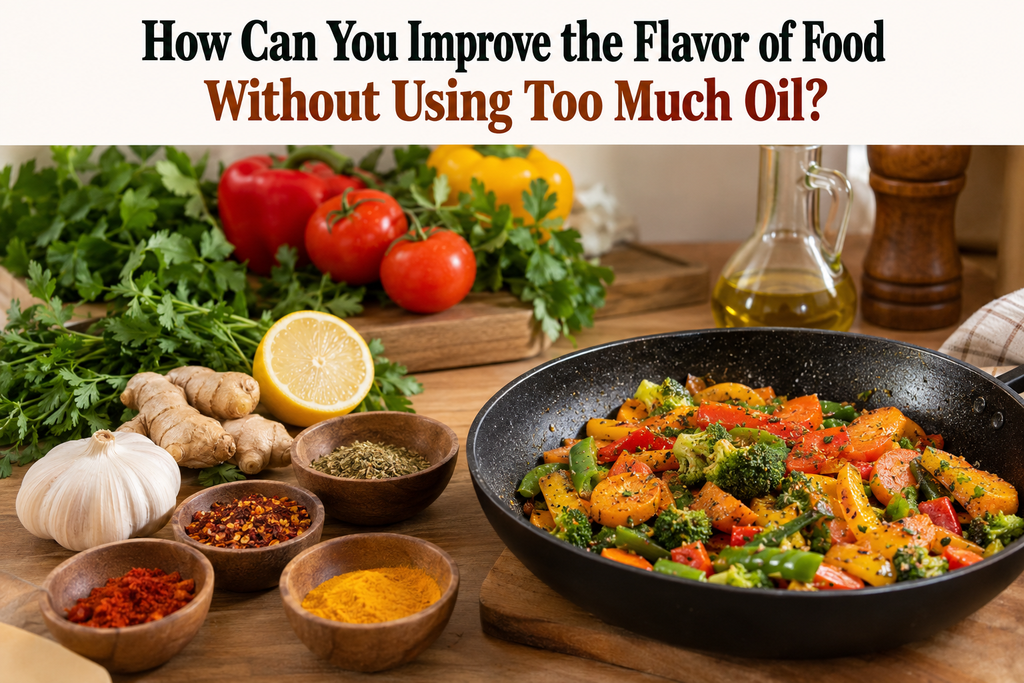
Cooking delicious food does not always require a large amount of oil. Many people believe that adding more oil makes meals richer, softer, and tastier. While oil can improve texture and help carry certain flavors, using too much may increase the calorie content of everyday meals. Fortunately, there are many simple cooking techniques that can make food flavorful without depending on excessive oil.
Learning how to improve the flavor of food without using too much oil is an important part of developing healthier cooking habits. Fresh herbs, natural spices, vegetables, cooking methods, and homemade sauces can transform ordinary ingredients into enjoyable meals.
The secret to flavorful cooking is understanding how different ingredients work together. A small amount of oil, combined with the right seasonings and proper cooking techniques, can produce satisfying results.
In this article, we will explore practical ways to make food taste better while keeping oil consumption under control.
1. Use Fresh Herbs to Add Natural Flavor
Fresh herbs are among the easiest ingredients for improving the taste of homemade meals without adding extra oil.
Herbs contain natural aromatic compounds that give food a pleasant smell and distinctive flavor. They can make simple dishes taste fresh and interesting.
Some useful herbs for everyday cooking include:
- Coriander for curries, vegetables, and salads
- Mint for yogurt sauces, chutneys, and refreshing dishes
- Basil for pasta, tomatoes, and homemade sauces
- Parsley for soups, rice, and roasted vegetables
- Rosemary for potatoes, chicken, and baked foods
- Thyme for soups, beans, and grilled dishes
Fresh herbs are especially useful when added near the end of cooking because prolonged heating can reduce some of their delicate aromas.
For example, adding fresh coriander to a vegetable curry just before serving can improve its fragrance without requiring additional oil.
Growing a few herbs at home can also make healthy cooking more convenient and affordable.
2. Experiment With Different Spices
Spices are essential for preparing flavorful food with less oil. They provide warmth, aroma, color, and depth to many dishes.
Common spices such as cumin, turmeric, black pepper, cinnamon, and coriander powder can create rich flavors even when only a small amount of oil is used.
Different spices contribute different characteristics to meals.
Cumin gives food an earthy flavor, while black pepper adds mild heat. Turmeric provides color and a slightly bitter, earthy taste. Cinnamon brings gentle sweetness and warmth.
One useful technique is toasting whole spices briefly in a dry pan over low heat. This process releases aromatic compounds and enhances their fragrance.
After toasting, the spices can be ground or added directly to suitable recipes.
However, spices should not be overheated because burning them can create an unpleasant bitter taste.
By learning how to combine spices correctly, home cooks can prepare satisfying meals without relying heavily on oil.
3. Add Lemon Juice and Other Natural Acids
Acidic ingredients can make food taste brighter and more balanced.
Lemon juice, lime juice, vinegar, and tomatoes are excellent options for improving flavor without adding much fat.
A small amount of lemon juice can make cooked vegetables taste fresher. Similarly, vinegar can improve the taste of homemade dressings, sauces, and certain meat dishes.
Natural acids are especially helpful when food tastes dull or heavy.
For example, a vegetable soup that seems ordinary may become more enjoyable after adding a little lemon juice.
Tomatoes are another useful ingredient because they provide natural acidity, moisture, and savory flavor.
Fresh tomatoes can be cooked into a sauce using a small amount of oil or even water, depending on the recipe.
The important point is to add acidic ingredients gradually and taste the food before adding more.
Too much acidity can overpower the other flavors.
4. Choose Cooking Methods That Require Less Oil
The way food is cooked has a major influence on its final taste and texture.
Some cooking methods require large amounts of oil, while others create delicious results using very little.
Grilling
Grilling develops a pleasant roasted flavor through direct heat. It works well for chicken, fish, vegetables, and certain fruits.
Marinating ingredients before grilling can improve their flavor and help prevent dryness.
Baking
Baking allows food to cook evenly without being submerged in oil.
Vegetables, potatoes, chicken, and fish can be baked with herbs, spices, and a measured amount of oil.
Steaming
Steaming preserves the natural taste and moisture of many vegetables.
After steaming, vegetables can be seasoned with lemon juice, black pepper, garlic, or fresh herbs.
Air Frying
An air fryer circulates hot air around food to create a crisp surface with much less oil than deep frying.
It can be useful for preparing potatoes, vegetables, and certain chicken recipes.
These cooking methods make it easier to prepare flavorful meals while controlling the amount of added oil.
5. Improve Flavor With Garlic and Ginger
Garlic and ginger are widely used in home cooking because they add strong and recognizable flavors.
Garlic contributes a savory aroma, while ginger provides warmth and a slightly sharp taste.
Both ingredients work well in soups, curries, vegetable dishes, and marinades.
Instead of frying garlic and ginger in a large quantity of oil, try cooking them with a small amount of oil over gentle heat.
A splash of water can be added when necessary to prevent ingredients from sticking.
Freshly chopped garlic and ginger often provide a stronger aroma than older ingredients that have been stored for too long.
For example, a simple mixture of garlic, ginger, tomatoes, and spices can create a flavorful base for chicken or vegetable curry.
This approach is particularly helpful for anyone interested in preparing traditional meals with less oil.
6. Use Onions to Create Natural Sweetness
Onions are another excellent ingredient for building flavor in homemade meals.
When onions are cooked slowly, their natural sugars contribute sweetness and a rich taste.
Many traditional recipes begin by frying onions in a generous amount of oil. However, onions can also be cooked with a smaller amount of oil by using a suitable pan and adjusting the heat.
Start by adding sliced onions to a pan with a little oil. Cook them over medium or low heat, stirring occasionally.
If the onions begin sticking, add a small splash of water.
As the onions soften and gradually brown, their flavor becomes deeper and sweeter.
This method may require more patience than frying onions quickly, but it can produce excellent results.
Cooked onions can improve the taste of rice, lentils, vegetables, soups, and meat dishes.
7. Make Homemade Sauces and Dressings
Store bought sauces and dressings sometimes contain large amounts of oil, sugar, or salt.
Preparing sauces at home allows better control over the ingredients and their quantities.
A flavorful dressing does not always need an oil rich base.
For example, plain yogurt can be combined with lemon juice, mint, garlic, and black pepper to create a refreshing sauce.
Another option is blending tomatoes, garlic, vinegar, and herbs into a light homemade sauce.
These preparations can be used with salads, grilled foods, sandwiches, and roasted vegetables.
Homemade sauces also provide opportunities to experiment with different flavors.
A little mustard, roasted cumin, or fresh coriander can make a simple dressing more interesting.
The goal is not necessarily to eliminate oil completely but to use it thoughtfully.
8. Marinate Food Before Cooking
Marinating is an effective way to improve the flavor of food without adding excessive oil.
A marinade is a mixture of ingredients used to season food before cooking.
Common marinade ingredients include yogurt, lemon juice, garlic, ginger, herbs, and spices.
For example, chicken can be marinated with plain yogurt, lemon juice, garlic, black pepper, paprika, and a small amount of salt.
The mixture coats the chicken and adds flavor before it reaches the pan or oven.
Marinating is also useful for fish, tofu, and vegetables.
The length of marinating depends on the ingredients. Delicate foods generally need less time than larger pieces of meat.
Always marinate perishable foods in the refrigerator rather than leaving them at room temperature.
A marinade that has touched raw meat should not be used as a ready to eat sauce unless it has been boiled thoroughly.
With the right preparation, marinating can make simple meals more enjoyable while reducing the need for extra oil.
9. Use Vegetable Stock Instead of Extra Oil
Vegetable stock is a useful ingredient for adding flavor and moisture during cooking.
It can be used in soups, rice dishes, sauces, and vegetable preparations.
When cooking vegetables in a pan, adding a small amount of stock can help prevent sticking while contributing additional flavor.
Homemade vegetable stock can be prepared by gently simmering ingredients such as onions, carrots, celery, garlic, and herbs in water.
After cooking, the liquid can be strained and used in suitable recipes.
Using a flavorful stock can make dishes taste richer without adding much fat.
However, commercially prepared stock may contain substantial amounts of sodium. Choosing a lower sodium variety or making stock at home allows better control over salt content.
10. Roast Vegetables to Develop Deeper Flavors
Roasting is one of the most effective techniques for making vegetables taste delicious.
High temperatures help develop browning and concentrated flavors on the surface of vegetables.
Carrots, cauliflower, potatoes, onions, pumpkin, and bell peppers are particularly suitable for roasting.
To prepare roasted vegetables, cut them into evenly sized pieces and season them with herbs and spices.
Add a small measured amount of oil and mix thoroughly so the pieces are lightly coated.
Spread the vegetables across a baking tray without overcrowding them.
Roast until they become tender and develop golden edges.
The natural sweetness of vegetables often becomes more noticeable during roasting.
This technique is especially useful for people who find boiled vegetables less appealing.
11. Choose Nonstick Cookware and Suitable Utensils
The type of cookware used in the kitchen can affect how much oil is needed.
A good quality nonstick pan allows many foods to cook with less added fat.
Eggs, vegetables, pancakes, and certain fish dishes can often be prepared using only a small amount of oil.
Proper temperature control is equally important.
Excessively high heat can cause food to stick, burn, or dry out.
Using a moderate temperature and stirring when necessary can improve cooking results.
For nonstick cookware, follow the manufacturer’s instructions and avoid overheating empty pans.
Stainless steel and well maintained cast iron pans can also produce excellent results when used correctly.
Learning how to manage heat is often more useful than simply adding additional oil whenever food begins to stick.
12. Measure Oil Instead of Pouring Directly
One of the simplest ways to reduce oil consumption is to measure the quantity used in cooking.
When oil is poured directly from a bottle, it is easy to add more than intended.
Using a teaspoon or measuring spoon provides greater control.
For reference, one tablespoon of oil contains approximately 120 calories, although the exact amount depends on the oil and serving size.
Even a small reduction in added oil can make a noticeable difference in the calorie content of frequently prepared meals.
Start by measuring the quantity normally used in a recipe.
Then experiment with slightly smaller amounts while adjusting the heat, adding moisture, or changing the cooking method.
This gradual approach helps preserve the familiar taste of homemade food.
It is also important to remember that some dietary fat supports nutrient absorption and provides essential fatty acids. The objective is moderation rather than complete elimination.
13. Balance Different Flavors in Every Dish
Delicious food usually contains a balance of several taste elements.
These include sweetness, saltiness, sourness, bitterness, and umami, which is a pleasant savory taste.
Understanding this balance can reduce the temptation to add more oil when food seems bland.
For example, if a curry tastes flat, it may need a little acidity or additional seasoning rather than extra fat.
If a tomato sauce tastes excessively sour, slowly cooked onions may help balance its flavor.
Mushrooms, tomatoes, and certain fermented ingredients can add savory depth.
Fresh herbs can provide a bright finishing touch, while toasted spices contribute warmth.
Taste food at different stages of cooking and make small adjustments.
Developing this habit improves cooking confidence and helps create consistently flavorful dishes.
14. Make Traditional Meals Flavorful With Less Oil
Many traditional dishes can be prepared with less oil without losing their familiar character.
For example, vegetable curry can begin with a measured amount of oil, followed by onions, garlic, ginger, tomatoes, and spices.
Adding a little water when necessary allows the ingredients to soften and develop flavor without excessive frying.
Chicken curry can be prepared using yogurt, tomatoes, and carefully balanced seasonings.
Lentils can be flavored with cumin, garlic, coriander, and a small quantity of oil.
Similarly, rice dishes can become more aromatic when cooked with cinnamon, cloves, cardamom, and bay leaves.
The important principle is to preserve the ingredients and techniques that give each dish its identity while adjusting the amount of added fat.
Small changes are often easier to maintain than completely replacing familiar recipes.
15. Finish Cooking With Fresh Ingredients
The final stage of cooking provides another opportunity to improve flavor.
Many ingredients lose some of their delicate aromas during prolonged heating.
Adding selected ingredients just before serving can restore freshness and make a dish more appealing.
Fresh coriander, chopped parsley, mint, lemon juice, and freshly ground black pepper are useful finishing ingredients.
A spoonful of plain yogurt can also add creaminess to suitable dishes without requiring more oil.
For example, a bowl of cooked lentils can become more flavorful with fresh coriander, a little lemon juice, and roasted cumin.
Similarly, grilled chicken can taste brighter with fresh herbs and a squeeze of lemon.
These finishing touches require little effort but can significantly improve the eating experience.
Frequently Asked Questions
Can food taste good without using oil?
Yes. Food can taste delicious without added oil when prepared using appropriate cooking methods and flavorful ingredients. Herbs, spices, garlic, ginger, lemon juice, and roasted vegetables can provide plenty of taste.
What is the best alternative to oil for cooking vegetables?
Water or vegetable stock can be useful for cooking certain vegetables in a pan. Steaming, baking, and air frying are also practical methods that require little or no added oil.
How can I make chicken flavorful with less oil?
Marinate chicken with yogurt, garlic, ginger, lemon juice, and spices. Then bake, grill, or cook it in a suitable pan with a measured amount of oil. Always cook chicken to a safe internal temperature of 74°C or 165°F.
Does reducing oil make food less healthy?
Not necessarily. Reducing excessive oil can help manage calorie intake, but completely avoiding dietary fats is not required for a healthy diet. Moderate amounts of unsaturated fats, such as those found in olive oil and certain vegetable oils, can be part of balanced eating.
How can I reduce oil in everyday curry?
Use measured oil, cook onions and tomatoes slowly, add water when needed, and build flavor with garlic, ginger, spices, and fresh herbs. These adjustments can help maintain a satisfying taste with less added fat.
Conclusion
Improving the flavor of food without using too much oil is easier when you understand the role of ingredients, seasoning, and cooking techniques.
Fresh herbs, aromatic spices, garlic, ginger, onions, and natural acids can make everyday meals more enjoyable. Cooking methods such as grilling, roasting, steaming, and baking provide additional opportunities to develop flavor while using less oil.
Measuring oil, choosing suitable cookware, preparing homemade sauces, and balancing different tastes can also improve cooking results.
The most practical approach is to make gradual changes to familiar recipes rather than completely changing the way you eat.
With regular practice, you can prepare delicious homemade meals that are satisfying, flavorful, and better aligned with your personal nutrition goals.
The key to cooking tasty food with less oil is simple: focus on building flavor through fresh ingredients, thoughtful seasoning, and proper cooking techniques rather than depending on additional fat.


